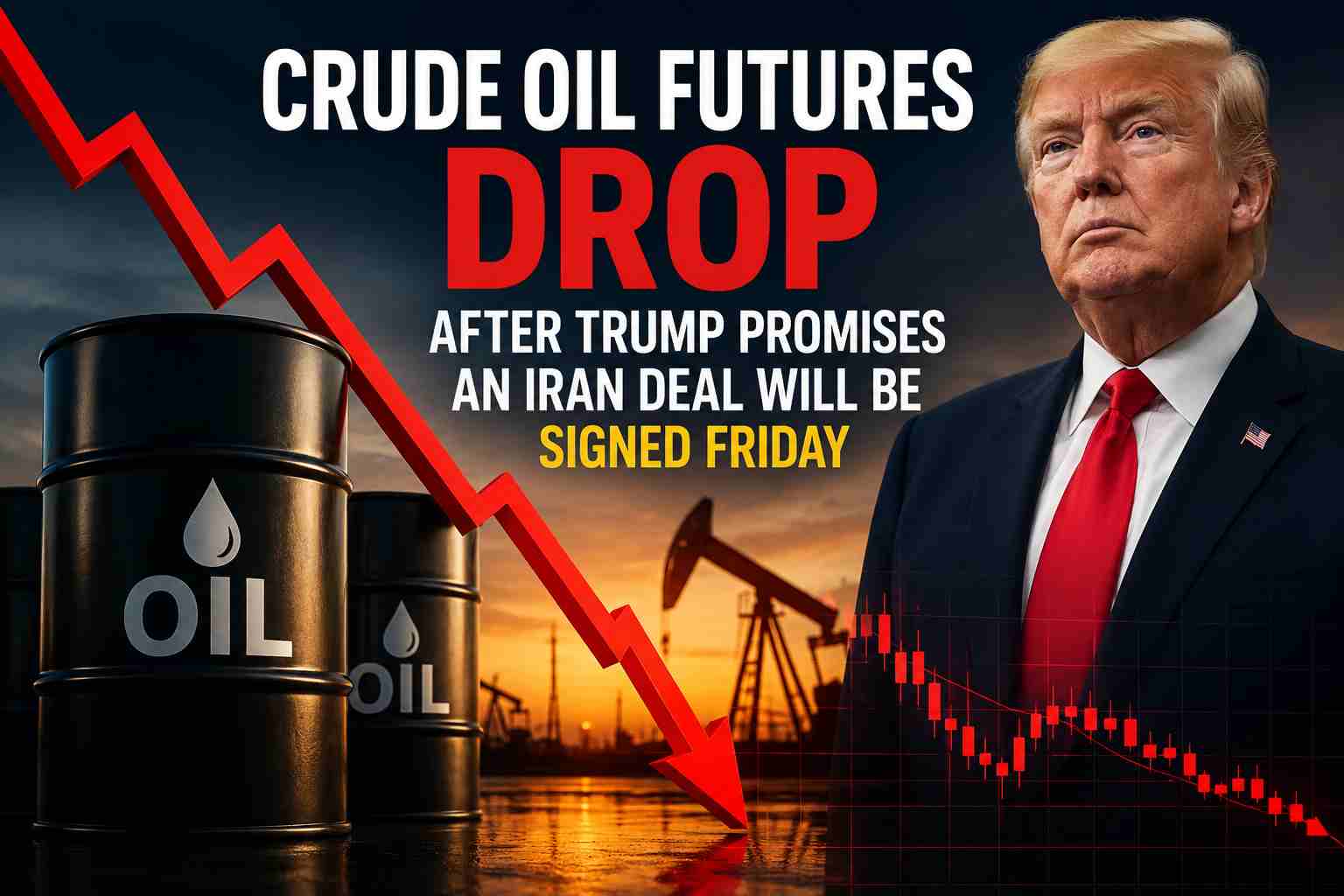
Global oil prices moved sharply lower after U.S. President Donald Trump announced that a new agreement with Iran is expected to be formally signed on Friday. The development eased fears of supply disruptions in the Middle East and increased optimism that oil exports from the region could return to normal levels.
Oil Prices Decline as Markets React to Diplomatic Progress
Crude oil futures dropped soon after Trump’s announcement, with investors expecting a reduction in geopolitical tensions that have kept energy markets on edge for months.
Brent crude and West Texas Intermediate (WTI) prices both moved lower as traders anticipated improved oil supplies and the reopening of major shipping routes. The decline represented one of the strongest single-day moves in recent weeks.
The market response reflected growing confidence that the conflict-related risks affecting global oil supplies may begin to ease.
Why the Iran Deal Matters for Oil Markets
Iran remains one of the world’s important oil producers, and tensions involving the country have had a major impact on global energy prices.
One of the biggest concerns for traders has been the security of the Strait of Hormuz, a strategic waterway through which nearly one-fifth of the world’s oil shipments pass. Any disruption in this area can trigger sudden increases in crude prices.
News that the United States and Iran have reached a preliminary understanding has raised hopes that shipping operations through the Strait of Hormuz could normalize in the coming days.
Trump Says Formal Agreement Will Be Signed Friday
According to Trump, negotiations have progressed successfully and a formal agreement is scheduled to be signed in Switzerland on Friday.
The proposed deal reportedly includes:
- A ceasefire framework.
- The reopening of the Strait of Hormuz.
- The lifting of certain maritime restrictions.
- A new period of negotiations covering Iran’s nuclear program and sanctions issues.
Officials from several countries have welcomed the development, although details of the agreement are still emerging. Analysts caution that important issues remain unresolved and that further negotiations will continue after the signing.
Reopening of the Strait of Hormuz Could Boost Supply
Energy markets closely monitor the Strait of Hormuz because it serves as a vital corridor for crude oil and liquefied natural gas exports.
Recent tensions had raised fears of prolonged disruptions and pushed oil prices higher earlier this year. However, expectations that the route will reopen have reduced concerns over shortages and increased confidence in global supply stability.
Greater access to Gulf oil exports could help stabilize fuel prices worldwide and reduce pressure on importing countries.
Financial Markets Respond Positively
The decline in oil prices was accompanied by gains in stock futures, as investors welcomed signs of reduced geopolitical risk.
Lower energy prices are generally viewed as supportive for economic growth because they can help:
- Reduce transportation and manufacturing costs.
- Ease inflation pressures.
- Improve consumer spending power.
- Support business profitability.
Investors are now watching upcoming developments closely to determine whether the agreement will be implemented successfully.
Analysts Warn Uncertainty Still Remains
Although markets reacted positively, analysts note that the agreement is still preliminary.
Several important issues—including sanctions, Iran’s nuclear program, and verification mechanisms—will require additional negotiations. Any setbacks or delays could cause oil prices to become volatile again.
Experts believe that sustained stability in energy markets will depend on the successful implementation of the agreement and continued diplomatic cooperation among regional and global powers.
Outlook for Crude Oil Prices
If the agreement is finalized as expected and shipping routes remain open, global oil supplies could improve over the coming months. Increased production and smoother exports may place downward pressure on crude prices and help stabilize energy markets.
However, traders remain cautious, as geopolitical developments in the Middle East continue to play a major role in determining the direction of oil prices.