Donald Trump made headlines yet again when, during a press gaggle on Air Force One, he dismissed a Bloomberg reporter with the words “Quiet, quiet, piggy.” This shocking outburst is more than just an insult — it raises serious questions about respect, media freedom, and the dynamics of power in political discourse.
Trump calls the reporter piggy: What actually happened
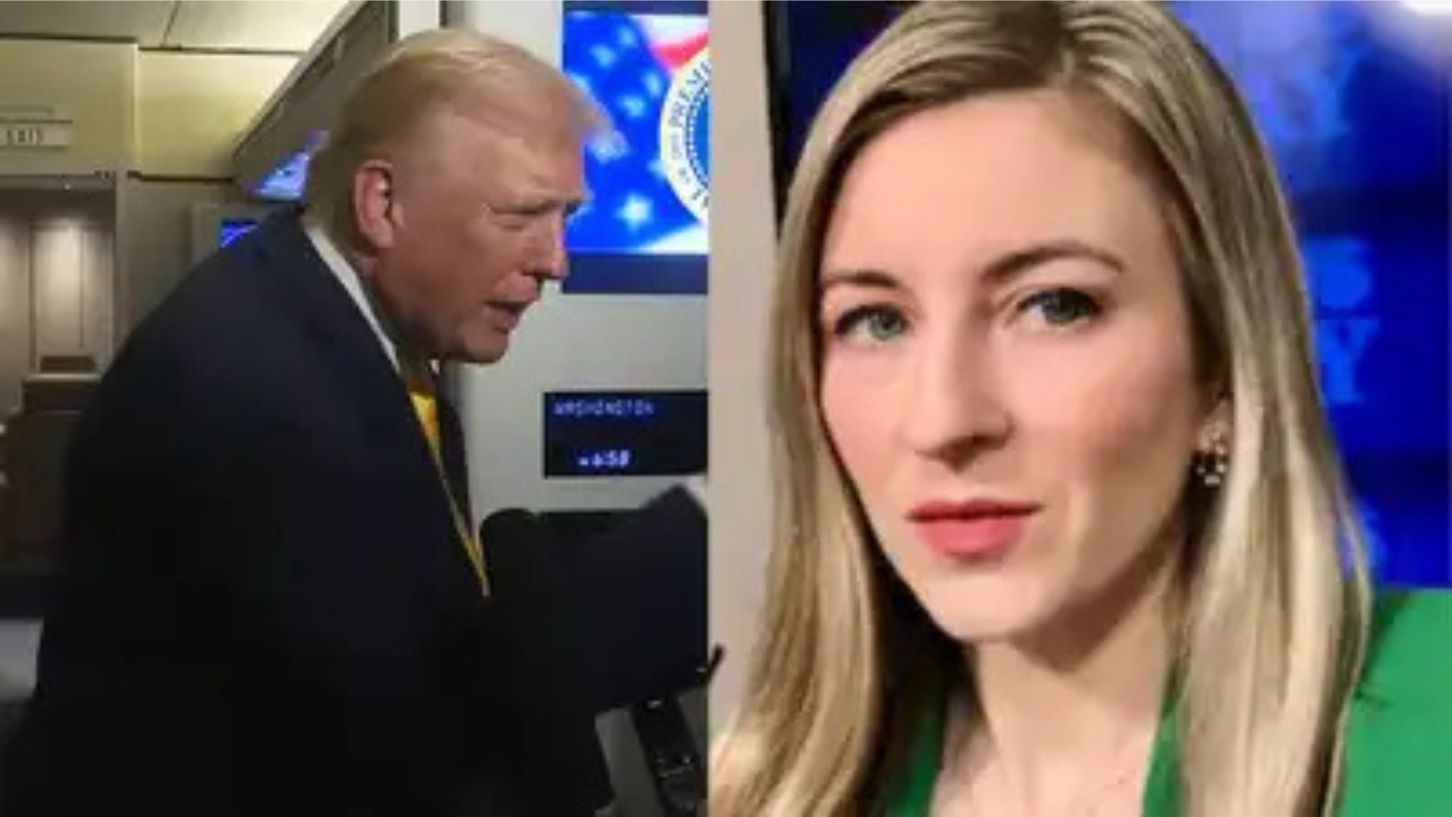
On November 14, 2025, as Air Force One flew from Washington, D.C., a Bloomberg News White House correspondent, identified later as Catherine Lucey, asked Trump a pointed question about the recent release of the Jeffrey Epstein files. She wondered whether there was anything “incriminating” in the documents. Instead of answering, Trump reacted sharply — leaning in, wagging his finger, and telling her, “Quiet, quiet, piggy.”
The clip of the exchange went viral shortly after its release, sparking widespread discussion. According to several reports, after that remark, he turned to another journalist and continued the gaggle, seemingly dismissing the question and the journalist altogether.
Why the “piggy” comment matters
Calling a journalist “piggy” is not just a random insult — it carries deeper implications. First, it’s demeaning, especially given that the person he addressed was a woman. This is not the first time Trump has used similar gendered or appearance-based insults: critics note that his pattern of calling women “Miss Piggy” in the past adds to the context, suggesting that this remark isn’t out of the blue.
Second, this kind of language from a person in a high position of power — the former President of the United States — can have a chilling effect. If a prominent public figure publicly belittles a journalist for simply doing her job, it may discourage not only her but others from asking tough or uncomfortable questions in the future.
For example, imagine a student in class questioning a teacher, only to be called “stupid” or “shut up.” Other students might hesitate to speak up again, fearing similar treatment. In politics, when leaders disparage journalists, it weakens the crucial role of the press in holding power to account.
Reactions: Backlash and defense
The comment didn’t go unnoticed. Many media people and onlookers strongly criticized Trump. CNN anchor Jake Tapper called the behavior “disgusting and completely unacceptable.” Former Fox News anchor Gretchen Carlson also condemned the insult, adding that such remarks undermine the dignity of the presidency.
Journalist April Ryan weighed in too, saying this is not just a moment of disrespect — it’s part of a pattern. She argued that calling a female journalist such a name is beneath the dignity expected of a leader. Elisa Lees Muñoz, director at the International Women’s Media Foundation (IWMF), called it a “gendered attack” meant to silence women.
On the other hand, the White House defended Trump’s comment, saying the reporter had behaved “inappropriately” and “unprofessionally” and that “if you’re going to give it, you have to be able to take it.” Critics argue that this defense normalizes verbal abuse and shifts the blame back to the journalist instead of holding Trump accountable.
Why this incident matters for journalism and democracy
This episode is important for several broader reasons:
- Press freedom and accountability
Journalists play a vital role. They ask difficult questions because they represent public interest. When a powerful figure responds with humiliation or insults, it undermines that role and discourages rigorous journalism. - Gender dynamics and respect
The use of a gendered insult reflects a disrespect that is often directed disproportionately at women in public life. It reminds us that sexism in media interactions remains a serious issue. - Power misuse
Using insults instead of engaging with substance lets leaders avoid accountability. Rather than addressing the question about Epstein’s emails, Trump sidestepped with an insult — raising concerns about what he might not want to answer. - Public example
Leaders set the tone. The way a president treats the media influences public discourse. If name-calling becomes acceptable, it lowers the bar for civil and respectful political engagement.
What we can learn and do
Here are some lessons and takeaways from this situation:
- Support fearless journalism: Audiences and institutions should back journalists who ask tough questions, even when powerful people react angrily.
- Demand respectful leadership: As citizens, we should hold public figures accountable not just for policies, but also for how they speak to others — especially the press.
- Recognize patterns of behavior: This isn’t just a one-off insult. It’s part of a broader context of how Trump interacts with certain members of the media. Understanding that pattern helps us analyze future events.
- Use a collective voice: When many people — including media voices, civil society, and the public — call out disrespectful behavior, it becomes harder for such behavior to be normalized.