The United States Department of Labor has suspended eight major technology companies from participating in the employment-based permanent residency process, raising concerns among foreign professionals who hope to settle in the country. The affected companies include major Indian IT service providers such as Tata Consultancy Services (TCS), Infosys, Wipro, HCLTech, and Cognizant, along with Microsoft, Adobe, and Capgemini.
The announcement came on October 8, 2026, as the US government increased its scrutiny of employment-based immigration programmes. Officials said the action was connected to investigations into alleged misuse of the permanent labor certification system and concerns about the treatment of American workers.
The decision could affect foreign employees whose employers were helping them pursue US permanent residency, commonly known as a Green Card. Indian professionals may be particularly concerned because many work for the companies named in the announcement.
However, the suspension does not mean that the entire US Green Card system or the H-1B visa programme has been shut down. The action targets the affected employers’ participation in a specific stage of the employment-based immigration process.
Which Technology Companies Have Been Suspended?
The reported suspension covers eight technology and IT services companies.
| Company | Main business |
|---|---|
| Tata Consultancy Services (TCS) | IT services and consulting |
| Infosys | IT services and digital consulting |
| Wipro | IT services and technology consulting |
| HCLTech | IT services and engineering |
| Cognizant | IT consulting and business services |
| Capgemini | IT services and consulting |
| Microsoft | Software, cloud computing and AI |
| Adobe | Digital media and software |
The companies were identified in reporting about the US government’s October 8 announcement. The Department of Labor’s action prevents it from accepting new or processing pending Permanent Labor Certification applications involving these employers while the suspensions apply.
The exact effect on individual workers will depend on their employer, application stage, and any subsequent government guidance or legal developments.
What Is the PERM Program?
The Permanent Labor Certification Program, commonly called PERM, is an important step in many employer-sponsored Green Card applications in the United States.
Under the programme, an employer generally must show that it has tested the US labor market and that there are not enough qualified, available US workers for the position. The employer must also meet applicable recruitment and wage requirements.
The process helps the government assess whether hiring a foreign worker for a permanent position meets the relevant legal requirements.
PERM is usually part of the employment-based Green Card route for certain workers applying through the EB-2 and EB-3 categories. After labor certification, the employer generally proceeds with an immigrant petition, followed by the worker’s application for permanent residency when eligible and when a visa number is available.
A PERM approval does not automatically grant a Green Card. Applicants must complete the remaining steps and meet the applicable immigration requirements.
How the Green Card process normally works
- Employer recruitment: The employer carries out the required recruitment process to test the US labor market.
- PERM application: The employer requests labor certification from the Department of Labor.
- Immigrant petition: Following certification, the employer generally files Form I-140 with US Citizenship and Immigration Services.
- Permanent residency application: The worker proceeds with the final application when eligible and when an immigrant visa is available.
The new suspension disrupts the PERM stage for the named companies. That can delay the next steps for employees who have not yet received labor certification.
Why Has the US Government Taken This Action?
US officials have argued that some employers may have misused immigration programmes in ways that disadvantaged American workers.
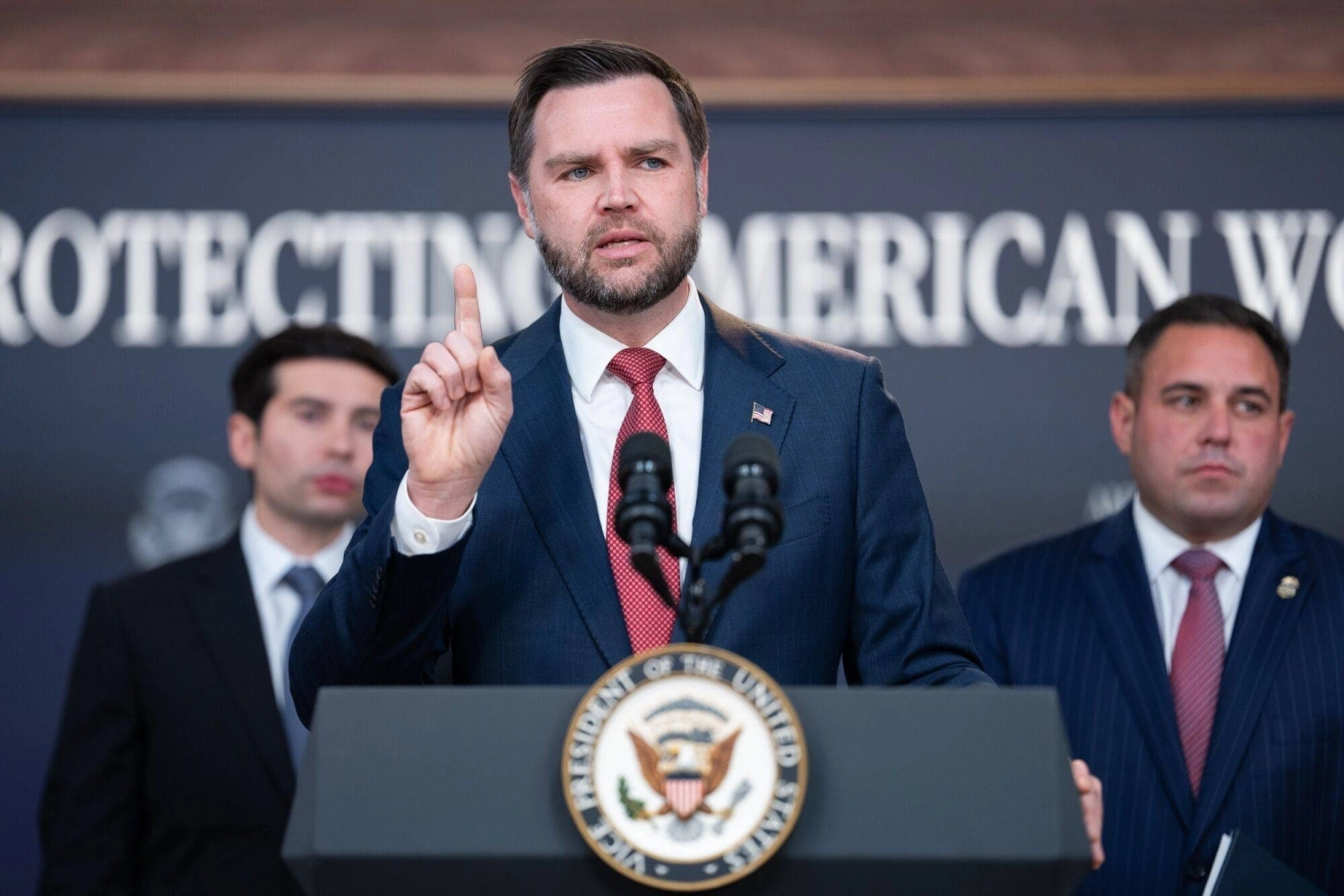
Vice President JD Vance and Labor Secretary Keith Sonderling raised concerns about alleged practices involving foreign-worker recruitment, American job displacement, and wage competition. The administration has also pointed to investigations into possible violations of immigration and labor rules.
The government’s position is that employers should not use immigration programmes to avoid hiring qualified American workers or to reduce labor costs improperly.
However, these are allegations and enforcement concerns, not proof that every affected company has committed wrongdoing. Each company’s circumstances and any findings from investigations must be assessed separately.
Microsoft has defended its practices. According to reporting on the company’s response, Microsoft said many of its H-1B filings were related to extending or changing the status of existing employees rather than bringing in new workers.
The outcome of the investigations and any legal challenges may influence how the suspensions develop.
What Does the Suspension Mean for Indian IT Workers?
The decision has raised concerns for Indian professionals who work in the United States and hope to obtain permanent residency through their employers.
Many skilled workers use temporary work visas to build their careers in the US before seeking a Green Card. Employer-sponsored permanent residency can provide a longer-term path to living and working in the country.
The suspension could create several challenges.
1. Delays in Green Card applications
Employees whose employers have not completed the PERM stage may face delays while the suspension remains in effect.
The restriction on processing new and pending applications means affected workers may have to wait for further guidance or a change in the government’s position.
The exact impact will depend on whether an employee’s application has already moved beyond PERM and on the legal status of the relevant case.
2. More uncertainty for H-1B workers
The H-1B programme allows US employers to hire eligible foreign professionals for certain specialty occupations. It is separate from the PERM labor certification process.
The October 8 action targets the named companies’ participation in PERM. It does not, by itself, cancel existing H-1B visas or suspend the entire H-1B programme.
Even so, workers who hoped to move from temporary status to permanent residency may need to reconsider their timelines and discuss their options with their employers and immigration lawyers.
3. Greater concern for workers facing long waits
Indian nationals in employment-based Green Card categories have often faced lengthy waits because demand can exceed the number of immigrant visas available.
A delay at the labor certification stage can add uncertainty for workers who are already planning around visa expiration dates, extensions, job changes, or family arrangements.
Employees should not assume that every application has been cancelled. They need to confirm the status of their individual cases and understand which immigration deadlines apply to them.
4. Possible changes in employer hiring plans
The affected companies may need to review their immigration and workforce strategies while the suspensions remain in place.
Depending on their circumstances, employers could consider local recruitment, changes to staffing plans, or other lawful options for retaining eligible employees. Such decisions will depend on business needs and applicable immigration rules.
Will the Suspension Affect the H-1B Visa Programme?
This is one of the most important questions for foreign professionals.
The PERM suspension is not the same as an H-1B visa ban. The two systems serve different purposes.
| Feature | PERM | H-1B |
|---|---|---|
| Main purpose | Labor certification for certain employer-sponsored permanent residency cases | Temporary employment in eligible specialty occupations |
| Immigration status | Part of a route toward a Green Card | Temporary nonimmigrant status |
| Main issue in the October 2026 announcement | Processing restrictions for the named employers | Not directly suspended by this specific action |
| Effect on affected workers | Can delay the permanent residency process | Existing status depends on the worker’s own visa and immigration circumstances |
The distinction matters because an employee can hold valid H-1B status while pursuing a separate Green Card process. A delay in PERM does not automatically invalidate that employee’s work authorization.
However, workers should not assume that a valid H-1B visa guarantees that every future immigration step will proceed without difficulty. Visa validity, authorized stay, extensions, and employment changes involve separate rules.
Could the Decision Affect Indian IT Companies?
The suspension could affect workforce planning for the Indian IT services sector, particularly companies that sponsor foreign employees for long-term US employment.
The direct effect may vary considerably from one company to another. Some firms rely more heavily on visa sponsorship, while others have increased local hiring and expanded their US-based workforces.
An analysis published by The Indian Express noted that Indian IT companies have been reducing their dependence on work visas through local hiring, nearshoring, and acquisitions of US businesses. The report also cited industry views suggesting that the direct financial impact could be limited for some companies.
That does not mean the suspension is unimportant. Immigration restrictions can affect employee retention, recruitment plans, project staffing, and the ability to offer a predictable long-term career path in the United States.
The final business impact will depend on how long the restrictions last, the number of applications affected, and the outcome of the investigations.
What Should Affected Employees Do Now?
Foreign professionals employed by the named companies should seek accurate information before making major career or immigration decisions.
Here are some practical steps:
- Check the application stage: Confirm whether the case is at the PERM stage, has received labor certification, or has moved to a later step.
- Contact the employer’s immigration team: Ask how the suspension affects the specific case and whether the employer has received additional instructions.
- Consult a qualified US immigration lawyer: Individual options depend on the worker’s status, application history, employer, and deadlines.
- Track visa dates: Keep records of visa expiration dates, authorized stay, and any pending extension or status-change applications.
- Avoid assumptions: Do not assume that an application is cancelled, that a visa is automatically invalid, or that changing employers will solve the problem.
Workers should rely on official government updates and advice tailored to their circumstances rather than social media claims about a blanket visa ban.
What Happens Next?
The next major development will be the progress of the investigations and any official clarification about the duration and scope of the suspensions.
The Department of Labor and other relevant authorities may provide further information as cases develop. Employers and workers will be watching for updates on whether applications remain blocked, whether the restrictions change, and what procedures may apply to individual cases.
The decision also raises a broader question about how the United States balances the protection of domestic workers with the recruitment and retention of international talent. The government says it is targeting alleged abuse of the system, while critics have warned that restricting access to permanent residency can create additional uncertainty for skilled foreign workers.
For Indian IT professionals, the immediate priority is to understand the difference between temporary work authorization and the employer-sponsored Green Card process. The suspension is a significant development for the named companies, but it does not amount to a general shutdown of all US work visas or permanent residency applications.
As more details emerge, workers and employers will need to assess the effects based on official decisions and the facts of each case.