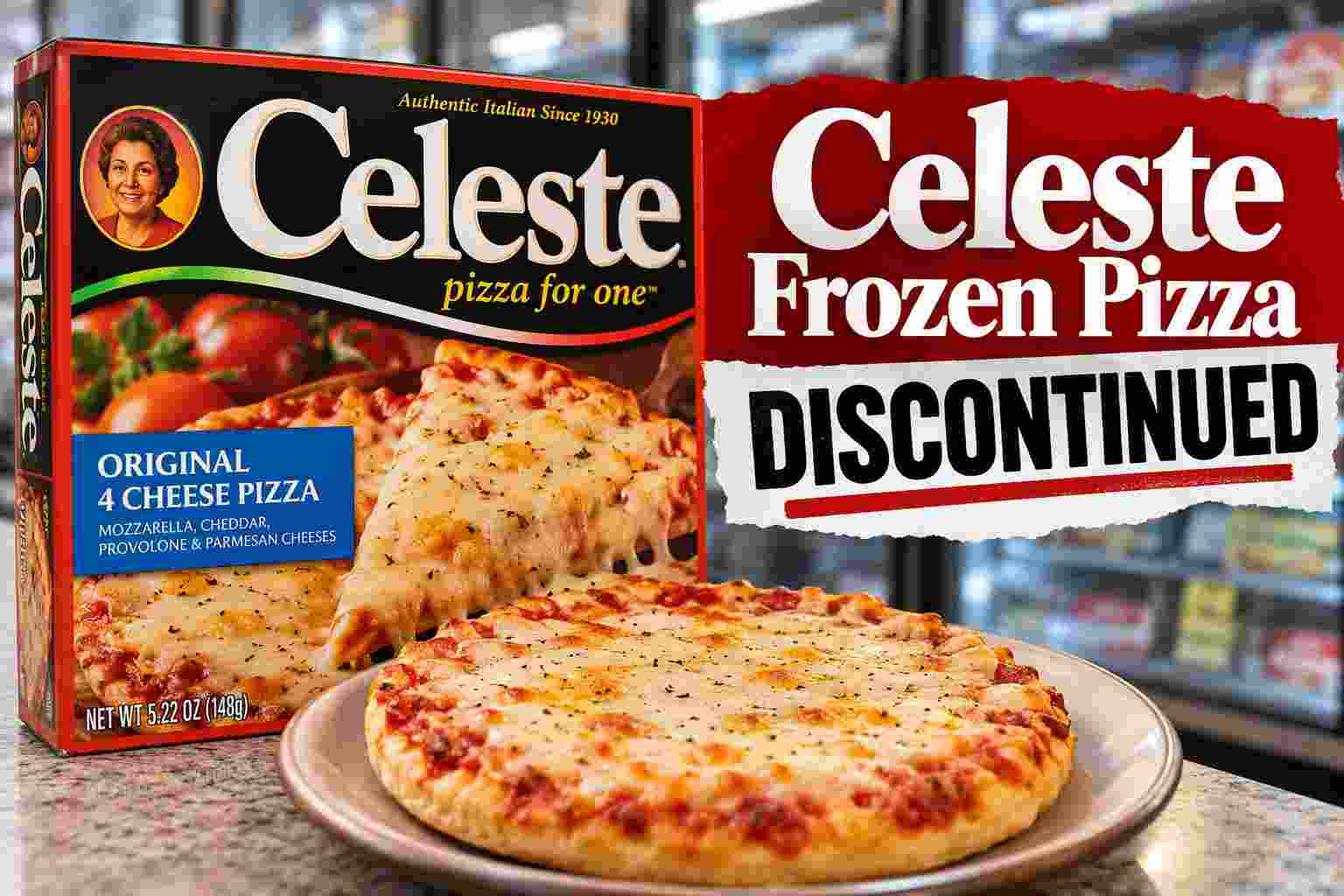
The decision was disclosed during Conagra’s fiscal first-quarter 2027 earnings presentation on September 30, 2026. It forms part of a wider business strategy aimed at reducing product complexity, improving profitability and directing investment toward brands with stronger growth prospects.
Although manufacturing has ended, customers may still find Celeste pizzas in some stores while remaining inventory is available.
The announcement has attracted attention from longtime customers, particularly those who remember the brand’s popular single-serving pizzas from the 1970s through the 1990s.
Why Was Celeste Frozen Pizza Discontinued?
Conagra Brands confirmed that it is exiting the Celeste frozen pizza business after reviewing its product portfolio.
The decision was driven by business considerations rather than a publicly announced food safety problem.
During the company’s September 30 earnings presentation, CEO John Brase explained that Conagra was examining its product lineup to identify opportunities to simplify operations and invest more effectively.
Celeste was identified as a business that no longer matched the company’s long-term priorities.
Conagra said exiting the product line reduced first-quarter net sales by approximately 15 basis points, equivalent to 0.15 percentage points. However, management expects the decision to improve profit margins over time.
The company is concentrating on brands and categories where it believes it has greater operating scale and opportunities for future growth.
This reflects a broader effort to reduce manufacturing complexity, streamline procurement and improve the efficiency of its product portfolio.
Can You Still Buy Celeste Frozen Pizza?
Consumers hoping to purchase Celeste pizza one final time may still have an opportunity.
A Conagra spokesperson confirmed to FOX Business that production has stopped, but retailers can continue selling products already manufactured.
This means availability will depend on remaining inventory at individual stores and distribution centers.
Some supermarkets may still carry Celeste pizzas, while others may have already sold their remaining supplies.
The company has not announced a nationwide final sales date.
Customers interested in finding the product can check local grocery stores or retailer websites for availability. Online listings may not always reflect actual stock, so confirming directly with the retailer may be useful.
Once existing supplies are exhausted, customers should not expect newly manufactured Celeste pizzas under the company’s current plans.
There has been no confirmed announcement of a production restart.
The History of Celeste Pizza: From Chicago Restaurant to American Freezers
Celeste pizza’s history stretches back decades, beginning with an Italian-American family food business in Chicago.
Celeste “Mama” Lizio and her husband, Anthony, opened a restaurant and tavern in Chicago in 1937.
Their business later expanded beyond restaurant service.
In 1962, the family moved into producing frozen pizzas and other Italian foods for local restaurants. This development helped establish the foundation of the Celeste brand.
The business attracted the attention of a much larger food company, Quaker Oats, which acquired Celeste in 1969.
Under Quaker Oats, the brand expanded its distribution and became increasingly recognizable to American grocery shoppers.
Mama Celeste herself became closely associated with its advertising and packaging.
The company’s image emphasized traditional Italian-style food prepared conveniently at home.
Over time, Celeste became particularly well known for its individual frozen pizzas, which offered a quick meal without requiring customers to prepare a full-sized pizza.
The Rise of Celeste Pizza for One
One of the brand’s most recognizable products was Celeste Pizza for One.
Its small size appealed to people who wanted an inexpensive and convenient meal without purchasing a larger pizza.
The product became familiar to students, busy households and consumers looking for something easy to prepare.
For many families, Celeste pizzas were associated with after-school snacks, late-night meals and simple dinners.
The brand’s single-serving format also helped distinguish it from larger frozen pizza products.
However, the frozen-food market changed substantially as competing manufacturers expanded their selections and consumers gained access to more convenient meal options.
Celeste remained recognizable, but its historical popularity was not enough to secure its future within Conagra’s changing business strategy.
How Celeste Became Part of Conagra Brands
Celeste passed through several corporate owners during its history.
After Quaker Oats acquired the business in 1969, the brand continued operating under different ownership structures.
Aurora Foods purchased Celeste in 1996.
The brand later became part of Pinnacle Foods following Aurora’s restructuring and combination with Pinnacle in 2004.
Conagra acquired Pinnacle Foods in 2018, bringing Celeste into a much larger portfolio of packaged-food products.
The acquisition also included other established food brands, expanding Conagra’s presence across grocery categories.
By 2026, however, Celeste had become one of the businesses selected for discontinuation as Conagra reassessed its operations.
Conagra’s Financial Performance Helps Explain the Decision
The Celeste announcement came during a period of pressure on Conagra’s sales performance.
According to the company’s fiscal first-quarter 2027 financial results, released September 30:
- Reported net sales declined 1.4% compared with the previous year.
- Organic net sales fell 1.1%.
- Adjusted operating margin reached 11.5%.
- Adjusted earnings per share increased 5.1% to $0.41.
The results showed that although profitability measures improved in some areas, the company continued to face challenges in generating sales growth.
Conagra has responded by reviewing its operations, prioritizing investment and looking for ways to reduce unnecessary costs.
Management expects the benefits of its broader product simplification program to develop gradually, with most improvements anticipated over the following 12 to 18 months.
The decision to discontinue Celeste is therefore part of a wider restructuring effort rather than an isolated product change.
Why Food Companies Discontinue Established Brands
The disappearance of a familiar food brand can surprise customers, especially when a product has remained available for decades.
However, consumer recognition alone does not guarantee that a product will remain commercially viable.
Large packaged-food manufacturers regularly evaluate their brands based on sales performance, production costs, profitability and future demand.
Maintaining a product line requires resources for manufacturing, packaging, transportation, distribution and retail support.
A smaller brand can become difficult to justify if those resources could generate better returns elsewhere.
Companies may also reduce the number of individual products they manufacture to make supply chains more efficient.
Conagra’s decision illustrates how established brands can disappear when corporate priorities change, even if they retain loyal customers.
Importantly, the company has not publicly released detailed standalone sales figures for Celeste in the announcements reviewed. Therefore, the exact number of pizzas sold before discontinuation and the brand’s individual revenue cannot be reliably established from those statements.
Fans React to the End of Celeste Pizza
News of Celeste’s discontinuation has prompted nostalgic reactions on social media.
Some customers recalled purchasing the pizzas at low prices during the 1980s and 1990s.
Others remembered eating them as children or keeping them in the freezer for quick meals.
For these consumers, the product represented more than a convenient dinner.
It was associated with family routines, childhood experiences and an earlier era of American supermarket shopping.
Several reactions highlighted the brand’s affordability, which helped make it memorable among consumers looking for inexpensive food options.
The response demonstrates the emotional connection that longstanding consumer brands can develop, even when their commercial performance no longer supports continued production.
What Does the Discontinuation Mean for Frozen Pizza Shoppers?
For consumers, the most immediate consequence is the gradual disappearance of Celeste products from retail stores.
Once remaining stock sells out, the brand will no longer be available through regular newly manufactured supplies under Conagra’s announced plans.
Shoppers seeking similar products will need to consider other frozen pizza brands or individual-serving alternatives.
The frozen pizza category remains populated by established competitors, including DiGiorno, Red Baron and Totino’s.
However, these products differ in size, preparation methods, ingredients and price.
Customers who particularly enjoyed Celeste’s individual portions may need to compare alternatives based on convenience and serving size rather than brand recognition alone.
The discontinuation does not mean the frozen pizza category itself is disappearing. Instead, it reflects one manufacturer’s decision to concentrate resources on a different selection of products.
Could Celeste Frozen Pizza Return in the Future?
Conagra has not announced plans to restart Celeste production.
The company’s statements indicate that the business has been discontinued and that remaining inventory will be sold until exhausted.
Although discontinued food brands can sometimes return under new ownership or through future business decisions, there is no confirmed indication that such a plan exists for Celeste.
Any claim that the brand is being relaunched, sold to another manufacturer or returning to supermarkets would require a new official announcement.
For now, the confirmed position is that Celeste pizza production has ended.
Frequently Asked Questions
Is Celeste frozen pizza officially discontinued?
Yes. Conagra Brands confirmed that it has stopped producing Celeste frozen pizzas as part of its business simplification strategy.
Why did Conagra stop making Celeste pizza?
Conagra decided to exit the brand to reduce complexity and redirect resources toward products and categories with greater scale and growth potential.
Is Celeste pizza still available in stores?
It may still be available at some retailers while existing inventory lasts. Availability varies by location, and production has already stopped.
Was Celeste pizza discontinued because of a recall?
The announced decision was related to business strategy and profitability. Conagra did not identify a food safety recall as the reason for ending production.
Who originally created Celeste pizza?
The brand traces its origins to Celeste “Mama” Lizio and her husband, Anthony, who established a Chicago restaurant business in 1937.
Will Celeste pizza come back?
No return has been announced. Conagra’s current position is that production has ended, with remaining stock being sold through retailers.