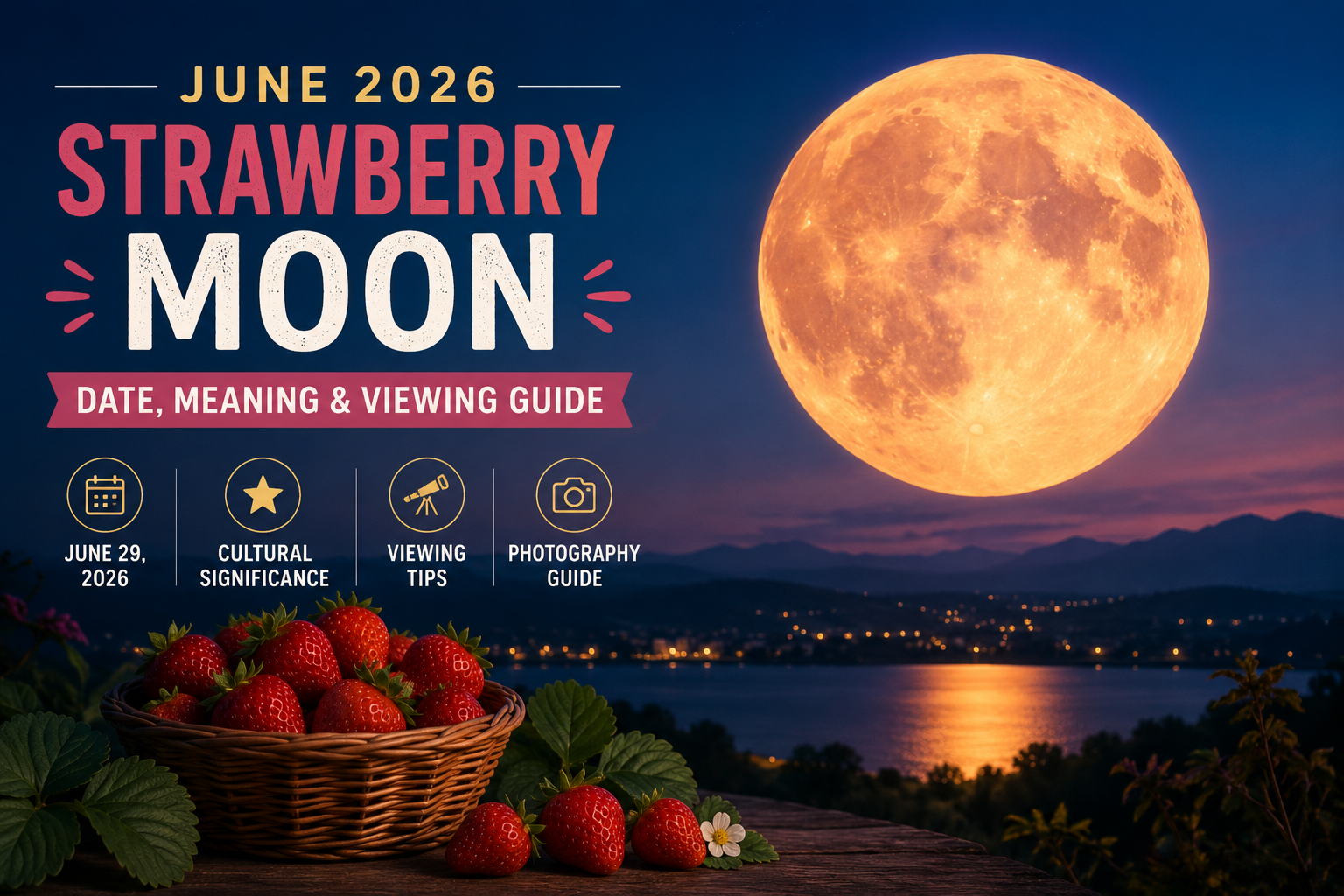
The night sky will offer a beautiful celestial event at the end of June 2026 as the annual Strawberry Moon reaches its peak. Skywatchers across the world will have an opportunity to witness one of the most famous full moons of the year, known for its cultural significance, seasonal connection, and striking appearance near the horizon.
Although the name may suggest a pink or red-colored moon, the Strawberry Moon has a much deeper historical meaning linked to nature and harvest traditions.
What Is the Strawberry Moon?
The Strawberry Moon is the traditional name given to the full moon that occurs in June. The name originated from Native American tribes, particularly those in northeastern North America, who associated this full moon with the short strawberry harvesting season.
For centuries, different cultures used full moon names to track seasonal changes and agricultural activities. The June full moon became known as the Strawberry Moon because it coincided with the ripening of wild strawberries and the beginning of summer harvests.
Many cultures have their own names for this lunar event, including:
- Rose Moon
- Mead Moon
- Honey Moon
- Hot Moon
- Green Corn Moon
These names reflect local traditions, farming cycles, and seasonal milestones.
When Will the Strawberry Moon Appear in 2026?
The June 2026 Strawberry Moon will reach its full phase on June 29, 2026. Astronomers note that the moon will appear full for several hours before and after the exact peak, making it visible across different regions of the world.
While the exact timing varies depending on your location and time zone, the best viewing opportunities will generally occur during moonrise and shortly after sunset.
Observers should check local moonrise times for the most accurate viewing experience.
Why Is the 2026 Strawberry Moon Special?
The 2026 Strawberry Moon stands out for several reasons.
1. Close to the Summer Solstice
This year’s Strawberry Moon occurs shortly after the summer solstice, the longest day of the year in the Northern Hemisphere. Events occurring near the solstice often attract greater attention because they symbolize the transition from spring into summer.
2. Low Position in the Sky
June full moons tend to follow one of the lowest paths across the sky for Northern Hemisphere observers. This creates a dramatic visual effect, making the moon appear larger and more colorful as it rises above the horizon.
3. Potential Micromoon Appearance
Astronomical calculations indicate that the June 2026 full moon occurs near the Moon’s farthest point from Earth, known as apogee. Because of this, it may appear slightly smaller than an average full moon, a phenomenon often called a “Micromoon.”
Why Does the Moon Sometimes Look Orange or Red?
Many people expect the Strawberry Moon to appear pink because of its name. In reality, the moon’s color is usually determined by atmospheric conditions rather than its name.
When the moon rises near the horizon, its light passes through a thicker layer of Earth’s atmosphere. This process filters out shorter wavelengths of light and can create orange, golden, or reddish tones.
Factors that may enhance these colors include:
- Dust particles in the atmosphere
- Humidity
- Air pollution
- Smoke from wildfires
- Weather conditions
These effects can make the moon look larger and more dramatic than it actually is.
Best Time to Watch the Strawberry Moon
The ideal time to observe the Strawberry Moon is during moonrise.
As the moon emerges from the horizon, it often appears unusually large due to a visual phenomenon known as the “Moon Illusion.” Although the moon’s actual size remains unchanged, nearby buildings, trees, and landscapes create the impression of a much larger moon.
For the best viewing experience:
- Find an open area with a clear eastern horizon.
- Avoid bright city lights when possible.
- Begin watching shortly before moonrise.
- Bring binoculars or a telescope for additional detail.
How to Photograph the Strawberry Moon
Capturing a stunning image of the Strawberry Moon does not require professional equipment.
Here are a few photography tips:
Use a Tripod
A stable camera reduces blur and improves image sharpness.
Include Foreground Objects
Buildings, mountains, trees, or landmarks can add scale and make the moon appear more dramatic.
Avoid Digital Zoom
Optical zoom lenses produce better-quality images than digital zoom features.
Shoot During Moonrise
The warm colors near the horizon often create the most visually appealing photographs.
Adjust Exposure Settings
Lower exposure settings can help preserve lunar details and prevent overexposure.
Cultural Importance of the Strawberry Moon
Throughout history, full moons played an important role in agriculture, navigation, and timekeeping.
For Indigenous communities, the Strawberry Moon marked a critical harvesting period and served as a seasonal reminder that summer had arrived. Similar traditions developed in Europe and other parts of the world, where June’s full moon became associated with growth, abundance, and fertility.
Even today, the Strawberry Moon remains one of the most recognized full moon events of the year, attracting photographers, astronomers, and casual skywatchers alike.