Court Ruling Raises Concerns Over Privacy and Voter Rights
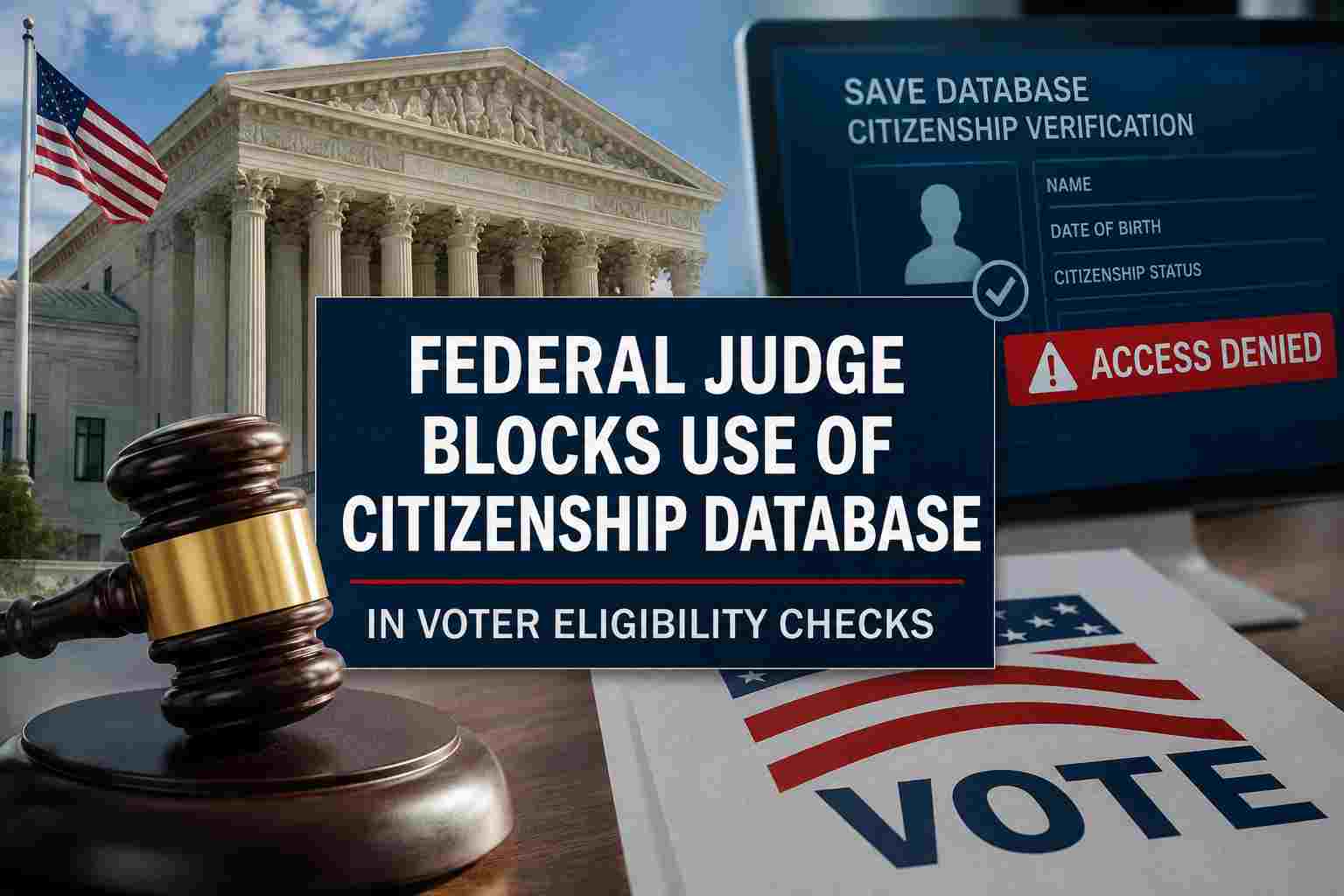
A federal judge has halted the use of a recently expanded federal citizenship verification database that was being used to help states review voter eligibility. The decision marks a significant legal setback for efforts to increase federal involvement in election administration ahead of the 2026 U.S. midterm elections.
The ruling centers on the federal government’s use of the Systematic Alien Verification for Entitlements (SAVE) database, a system originally designed to verify immigration and citizenship status for public benefit programs. Recent changes allowed election officials in some states to use the database to compare voter registration records against federal citizenship information.
Why the SAVE Database Became Controversial
The SAVE system was created to help government agencies confirm an individual’s immigration status when determining eligibility for various public services. However, federal officials expanded its capabilities in 2025 and 2026, making it easier for state election agencies to conduct large-scale citizenship checks on voter registration rolls.
Supporters argued that the changes would strengthen election security by helping states identify non-citizens who may have been mistakenly registered to vote. They claimed that access to federal records would improve confidence in election outcomes and ensure compliance with federal voting laws.
Critics, however, warned that the database was never designed to serve as a nationwide voter verification tool. Voting rights groups argued that inaccurate or outdated records could mistakenly flag eligible voters, particularly naturalized citizens whose citizenship status may not be updated immediately across all federal systems.
Judge Finds Serious Privacy and Accuracy Risks
In a detailed court decision, U.S. District Judge Sparkle L. Sooknanan ruled that the federal government’s implementation of the expanded database created significant risks to voter privacy and election participation. The court found that the revised system aggregated large amounts of personal information, including sensitive identifying data, in ways that could conflict with federal privacy protections.
The judge expressed concern that eligible American citizens could be removed from voter rolls due to database errors or mismatches. According to the ruling, protecting election integrity cannot come at the expense of citizens’ privacy rights and lawful access to voting.
The court also concluded that portions of the database expansion may violate federal laws governing the sharing and use of personal information maintained by government agencies.
Impact on States Using Federal Citizenship Checks
Several states had already begun comparing voter registration lists against the federal database as part of efforts to identify potential non-citizen registrations. Some election officials viewed the system as an additional verification tool that could help maintain accurate voter rolls.
Voting rights organizations argued that these comparisons sometimes produced false matches, leading to concerns that lawful voters could be wrongly flagged or removed from registration lists. Naturalized citizens were considered particularly vulnerable because immigration databases may not always reflect recent citizenship updates.
The judge’s order prevents the federal government from continuing to use the expanded version of the database for these election-related purposes while legal challenges continue.
Connection to Broader Election Policy Efforts
The legal battle is part of a larger national debate over election security, voter eligibility verification, and the role of the federal government in election administration. In March 2026, an executive order sought to expand citizenship verification efforts by encouraging greater use of federal databases and the creation of citizenship-related election records.
Election administration in the United States is traditionally handled by individual states, and several courts have previously questioned attempts to increase federal control over election procedures. The latest ruling adds another chapter to ongoing legal disputes surrounding voting regulations, mail-in ballots, voter registration requirements, and proof-of-citizenship measures.
Reactions From Both Sides
Voting rights advocates welcomed the decision, arguing that election security measures should not create barriers for eligible voters. They maintain that voter fraud involving non-citizens is rare and that broad database checks risk disenfranchising lawful voters.
Federal officials defending the program have argued that stronger citizenship verification tools are necessary to ensure only eligible citizens participate in federal elections. They contend that election integrity remains a critical public concern and that states should have access to reliable verification resources.
What Happens Next?
The ruling does not end the broader debate over citizenship verification and election security. Federal officials may appeal the decision, while voting rights organizations are expected to continue challenging policies they believe could affect voter access.
As the 2026 midterm elections approach, courts are likely to remain a key battleground in determining how states verify voter eligibility and what role federal databases can play in that process. The outcome could influence future election policies and shape the balance between election security, privacy rights, and voter access across the United States.