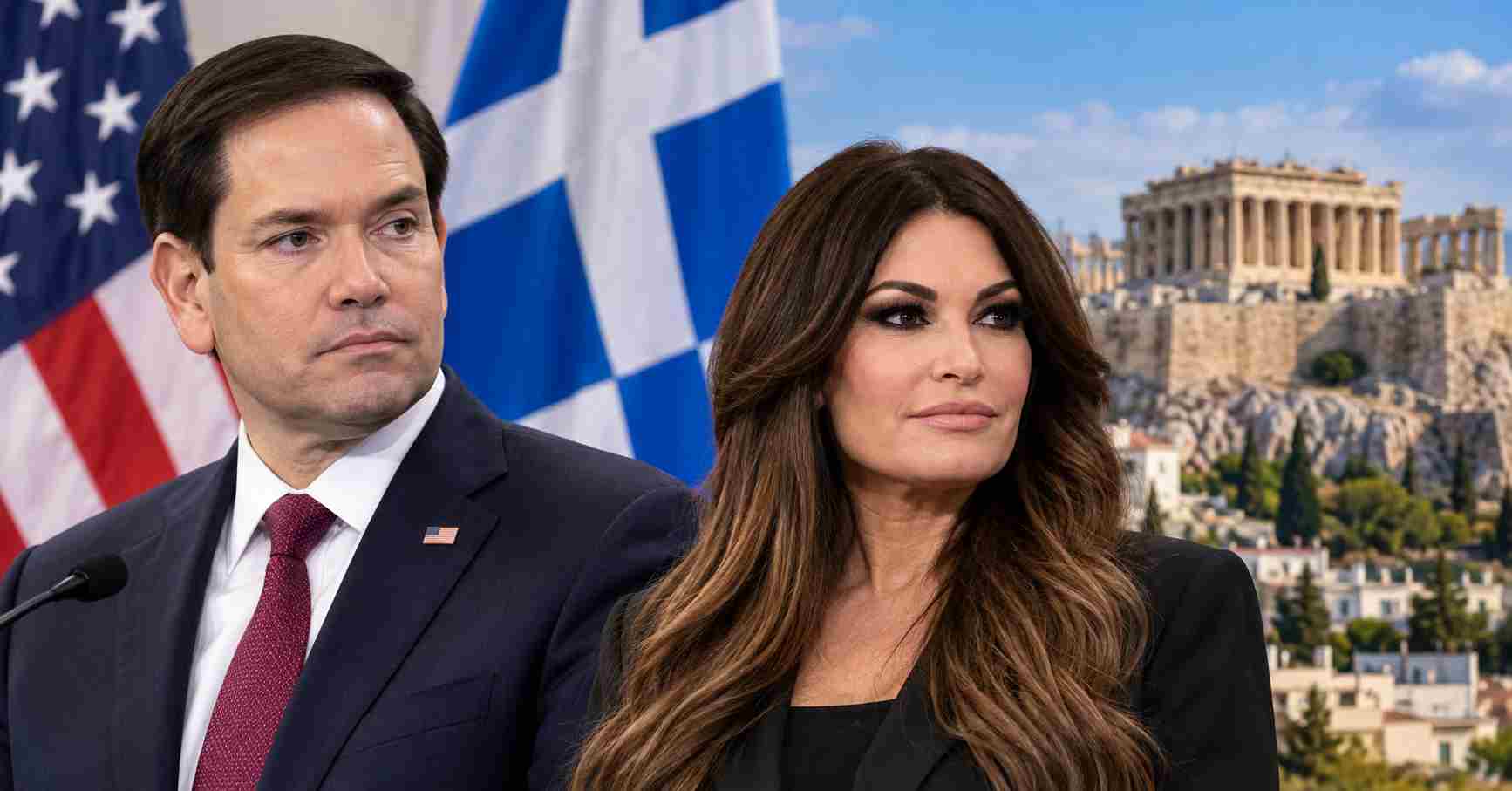
US Secretary of State Marco Rubio has declined to address fresh allegations involving Kimberly Guilfoyle, the American ambassador to Greece, after a newspaper investigation raised questions about her financial dealings with a political donor before she assumed her diplomatic position.
The controversy intensified following a Wall Street Journal report alleging that Guilfoyle sought $100,000 from a supporter of President Donald Trump to settle a credit card balance while offering to help him gain access to senior administration officials.
Rubio, who was visiting Greece for diplomatic engagements, refused to assess the allegations publicly. His response came as Democratic lawmakers pressed the State Department to examine separate claims concerning Guilfoyle’s activities as ambassador.
The developments have brought renewed attention to political influence, potential conflicts of interest and ethical expectations for senior American diplomats.
What Are the Allegations Against Kimberly Guilfoyle?
According to an October 8 investigation by The Wall Street Journal, Guilfoyle requested financial assistance from Eric Deters, a Kentucky political activist, former congressional candidate and Trump supporter.
The newspaper reported that communications it reviewed showed Guilfoyle seeking $100,000 to reduce an American Express credit card balance ahead of her July 2025 Senate confirmation hearing.
The reported exchanges also described efforts to help Deters establish contact with influential figures in the Trump administration.
Deters had reportedly sought assistance with personal legal and tax-related matters, including efforts to attract the attention of federal officials.
The Journal reported that the requested $100,000 payment was never made. Deters said he could not provide the money because of the potential consequences for his marriage.
Guilfoyle’s attorney, Jesse Binnall, disputed the authenticity of the reported messages but did not provide detailed explanations identifying which communications were allegedly inaccurate.
Her legal representative also said she had previously been compensated for appearances at political events and was owed outstanding payments for some of that work.
Importantly, the allegations remain disputed. The published reporting does not establish that Guilfoyle received the requested $100,000 or that a criminal offense occurred.
Marco Rubio Declines to Discuss the Controversy
Rubio faced questions about the allegations during his diplomatic visit to Athens.
Speaking to journalists before leaving Greece on Thursday, October 8, the secretary of state acknowledged being aware of the Wall Street Journal investigation but said he did not know whether its claims were accurate.
He challenged the assumption that information published by news organizations should automatically be accepted as established fact.
Rubio also declined to say whether he would initiate a State Department investigation into the ambassador’s conduct.
During a joint news conference with Greece’s foreign minister the previous day, Rubio had similarly avoided discussing the controversy, arguing that a diplomatic event in another country was not an appropriate setting for addressing such allegations.
However, he expressed confidence in the American diplomatic mission in Athens and publicly praised Guilfoyle’s work as ambassador.
His remarks demonstrated continued support for the embassy while leaving questions about the reported financial dealings unanswered.
Congressional Democrats Demand Greater Scrutiny
The controversy has also attracted attention from senior Democratic lawmakers responsible for overseeing American foreign policy.
Senator Jeanne Shaheen, the leading Democrat on the Senate Foreign Relations Committee, and Representative Gregory Meeks, the ranking Democrat on the House Foreign Affairs Committee, have sought a State Department review of Guilfoyle’s reported activities.
Their concerns initially focused on a separate Wall Street Journal investigation published in September 2026.
In an October 1 letter to Rubio, Meeks raised questions about whether Guilfoyle had used her official diplomatic position to advance private commercial interests.
The lawmaker also sought information about her interactions with business representatives and whether those relationships created potential conflicts of interest.
Shaheen separately requested clarification about the State Department’s oversight of the ambassador’s activities and the steps being taken to protect the integrity of American diplomacy.
The lawmakers’ requests increase political pressure on the department, although calls for an investigation should not be confused with a finding of misconduct.
Earlier Allegations Involving a Greek Energy Company
Before the latest financial allegations emerged, Guilfoyle had already faced questions about her relationship with individuals connected to the Greek construction and energy company Aktor Group.
The Wall Street Journal reported in September that Guilfoyle had promoted business interests associated with the company during diplomatic engagements in southeastern Europe.
The reporting also raised concerns about Christos Marafatsos, a registered lobbyist associated with Aktor, who allegedly accompanied the ambassador to meetings involving government officials.
Some participants reportedly did not understand that Marafatsos represented private commercial interests.
According to the House Foreign Affairs Committee’s account of the allegations, lawmakers were concerned about the potential use of diplomatic access to benefit a particular company.
Separate reporting also described remarks Guilfoyle allegedly made concerning the ability of the United States to influence political developments in other countries, including Greece.
Guilfoyle has denied wrongdoing. Her representatives have disputed aspects of the reporting, while lawyers representing Aktor have rejected claims that the company received improper diplomatic assistance.
These allegations remain contested and require careful distinction from verified official findings.
Who Is Kimberly Guilfoyle?
Kimberly Guilfoyle is an American political figure, former television personality and former prosecutor who became a prominent supporter of Donald Trump.
She previously worked as a host on Fox News and developed a high public profile through her involvement in Republican political campaigns.
Guilfoyle was also previously engaged to Donald Trump Jr., the president’s eldest son.
Trump nominated her to serve as US ambassador to Greece in December 2024, and she subsequently received Senate confirmation.
Her appointment attracted considerable attention because of her political connections and public profile.
As ambassador, her responsibilities include representing US interests, maintaining diplomatic relationships with Greek officials and supporting cooperation between the two countries.
The latest controversy has raised questions about how political relationships and private financial activities should be managed when an individual enters senior diplomatic service.
Why the Allegations Matter for US-Greece Relations
Greece is an important American partner in southeastern Europe and a member of NATO.
The two countries cooperate on defense, regional security, trade and energy development.
American diplomatic engagement with Greece has become particularly significant as Washington seeks to strengthen energy connections and security cooperation across Europe.
During his October visit, Rubio emphasized the historical relationship between the United States and Greece while advocating closer cooperation among Western allies.
Against that diplomatic backdrop, allegations involving private business interests and access to government officials carry potential reputational consequences.
Diplomats are expected to represent national interests rather than use their positions to provide preferential treatment to private individuals or businesses.
Questions about the boundaries between official responsibilities and personal relationships can therefore affect public confidence even before any formal determination of misconduct.
However, there is no established evidence in the cited reporting that the allegations have disrupted formal diplomatic cooperation between Washington and Athens.
What Happens Next?
Several important questions remain unresolved.
The State Department has not publicly announced a formal investigation in the reporting available as of October 8, and Rubio has not committed to opening one.
Congressional lawmakers may continue requesting documents, explanations and details about the ambassador’s interactions with private individuals and companies.
Any official review would need to examine the authenticity and context of the reported communications, the nature of any financial arrangements, and whether applicable government ethics requirements were violated.
It would also need to distinguish conduct occurring before Guilfoyle assumed her ambassadorial responsibilities from activities undertaken while she was serving in an official capacity.
The absence of a public finding means it would be premature to conclude that the ambassador committed misconduct.