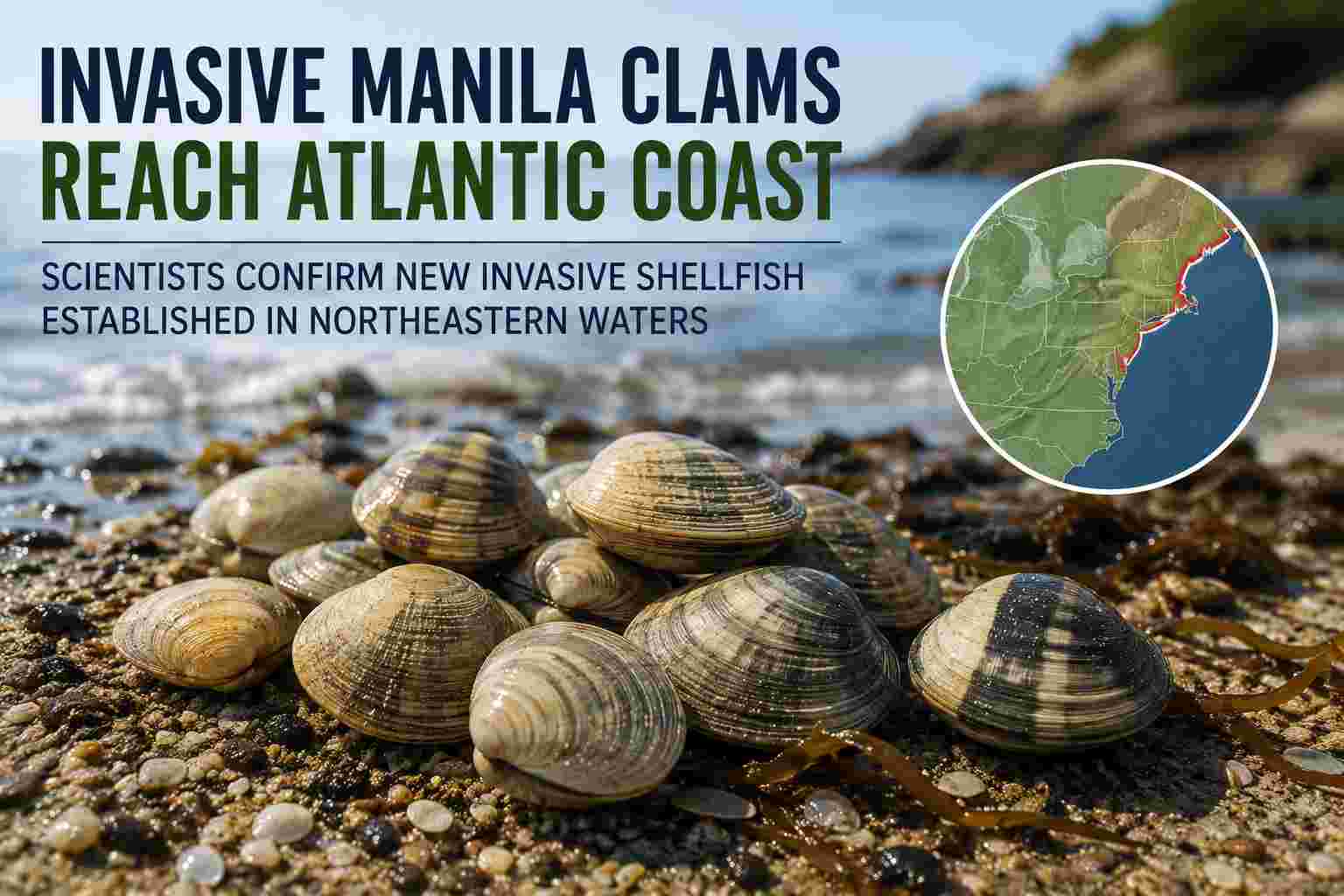
Marine researchers have confirmed that the Manila clam (Ruditapes philippinarum), one of the world’s most commercially valuable shellfish, has established breeding populations along the northeastern Atlantic coastline of the United States. The finding marks a significant milestone in marine ecology because the region was previously considered the last major Northern Hemisphere coastline without an established Manila clam population.
Although the species is prized by seafood lovers and supports a multibillion-dollar global aquaculture industry, scientists warn that its arrival could reshape local coastal ecosystems by competing with native shellfish and altering intertidal habitats.
What Are Manila Clams?
Manila clams are small saltwater shellfish native to the coastal waters of Japan, China, South Korea, and eastern Russia. They are among the most widely farmed clam species in the world due to their:
- Sweet, mild flavor
- Fast growth rate
- High commercial value
- Ability to thrive in a variety of coastal environments
Over the past century, the species has spread across Europe and North America’s Pacific Coast through aquaculture activities, shipping, and accidental introductions. Researchers have now confirmed that it has successfully reached and established populations along the northeastern Atlantic coast as well.
Researchers Confirm Established Colonies
The discovery followed several years of unusual observations by scientists and citizen observers.
Marine biologists first received reports of unfamiliar clams appearing in coastal areas. After extensive field surveys, shell identification, and genetic analysis, researchers confirmed that the populations were indeed Manila clams.
The findings were published in the peer-reviewed journal Biological Invasions, documenting the first confirmed establishment of the species in this region.
Scientists say this represents a rare opportunity to observe an invasive marine species during the earliest stages of colonization before it becomes widespread.
Why This Discovery Matters
The establishment of Manila clams is important because invasive species can permanently alter coastal ecosystems.
Unlike occasional sightings of individual organisms, established breeding populations indicate that the species has successfully adapted to local environmental conditions and is reproducing naturally.
This raises important ecological questions, including:
- How quickly the population will expand
- Whether native shellfish will decline
- How local food webs may change
- What management strategies may become necessary
Researchers will continue monitoring the spread over the coming years.
Possible Ecological Impacts
Competition With Native Clams
One of the primary concerns is competition for habitat and food.
Native clam species rely on similar sandy and muddy coastal environments where Manila clams are known to thrive.
As invasive populations increase, they may:
- Occupy available habitat
- Compete for plankton and nutrients
- Reduce space for native shellfish to reproduce
Scientists caution that long-term ecological monitoring will be needed to determine the full extent of these interactions.
Potential Hybridization
Researchers have also identified the possibility that Manila clams could hybridize with closely related clam species.
Hybridization can alter genetic diversity and complicate conservation efforts aimed at protecting native shellfish populations.
Although the long-term consequences remain uncertain, scientists consider this one of several ecological risks associated with the species’ establishment.
Changes to Coastal Food Webs
The arrival of a new shellfish species may also affect marine food chains.
Manila clams can become food for:
- Shorebirds
- Seabirds
- Crabs
- Fish
- Raccoons and other coastal wildlife
In some ecosystems, invasive shellfish eventually become an important food source for native predators.
Researchers say this could partially offset some ecological impacts, though it does not eliminate concerns about competition with native species.
A Valuable Seafood Species
Interestingly, Manila clams are not only an invasive species—they are also considered one of the world’s most valuable edible shellfish.
Globally, the species supports an aquaculture industry worth approximately $7 billion annually, making it one of the most commercially important clams in seafood markets.
Their popularity stems from:
- Tender texture
- Mild taste
- High culinary versatility
- Strong consumer demand
They are commonly served in:
- Pasta dishes
- Seafood soups
- Steamed shellfish platters
- Asian cuisine
- Chowders
How Did Manila Clams Reach the Atlantic Coast?
Scientists believe the spread likely occurred through one or more human-related pathways.
Possible introduction routes include:
Shipping Activities
Ships can unintentionally transport marine organisms through ballast water or by carrying them on hull surfaces.
Aquaculture Transfers
The global movement of shellfish for farming has historically contributed to the spread of several marine species.
Accidental Human Transport
Marine organisms may also be moved unintentionally through equipment, boats, or shellfish transfers.
Researchers have not yet determined the exact pathway responsible for the northeastern Atlantic population.
Why Scientists Were Expecting This
Marine biologists say the discovery was not entirely unexpected.
Because Manila clams had already established populations across much of Europe and North America’s Pacific Coast, the northeastern Atlantic represented one of the few remaining regions where the species had not yet become established.
Increasing global shipping, international seafood trade, and changing environmental conditions have increased opportunities for marine species to expand beyond their native ranges.
Implications for Coastal Fisheries
The arrival of Manila clams creates both opportunities and challenges.
Potential benefits include:
- A possible future commercial fishery
- Increased seafood availability
- Additional food resources for marine wildlife
Potential concerns include:
- Competition with native shellfish
- Habitat modification
- Monitoring and management costs
- Ecological uncertainty
Many fisheries agencies will likely continue monitoring population growth before considering any management or harvesting strategies.
Importance of Native Shellfish Habitats
The Atlantic coast supports diverse shellfish habitats, including:
- Hard clams
- Oysters
- Scallops
- Surfclams
- Ocean quahogs
These habitats play a critical ecological role by:
- Filtering seawater
- Stabilizing sediments
- Supporting fish and invertebrates
- Providing food for wildlife
Protecting native shellfish communities remains a priority for marine conservation organizations.
Ongoing Research
Researchers are now focused on several key questions:
- How rapidly will Manila clams spread?
- Can native species coexist with the newcomer?
- Will warming ocean temperatures accelerate expansion?
- What ecological impacts will emerge over time?
- Should management strategies be implemented early?
Long-term monitoring will help scientists better understand how this newly established species interacts with Atlantic coastal ecosystems.