India Takes Action Against Telegram Before NEET-UG Retest
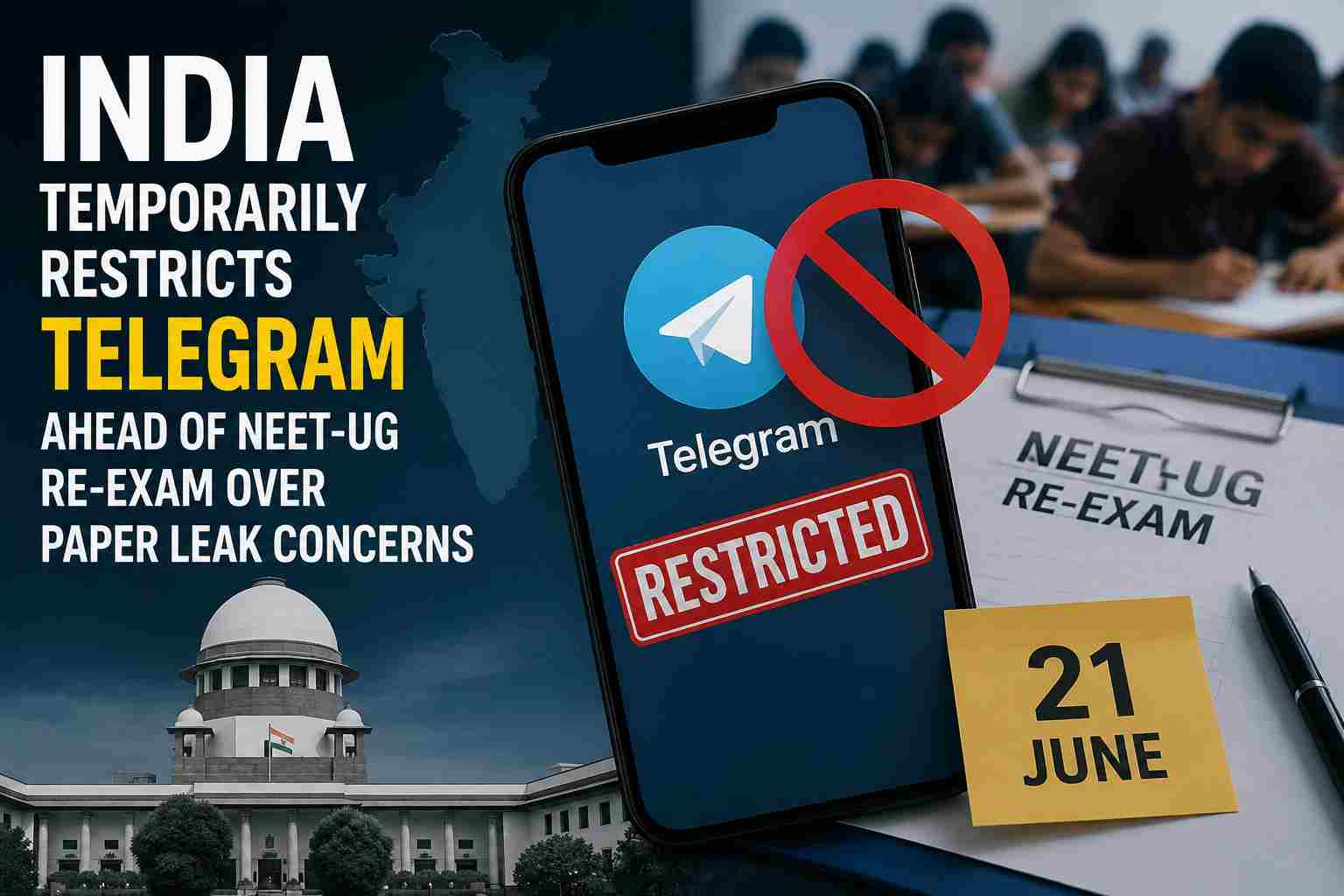
The Indian government has temporarily restricted access to Telegram over concerns that the messaging platform could be used by organized cheating networks ahead of the National Eligibility cum Entrance Test (NEET-UG) re-examination scheduled for 21 June.
The decision comes after authorities cancelled the original NEET-UG exam held in May following allegations that question papers had been leaked. Officials say the temporary restriction is aimed at preventing the spread of confidential exam material and protecting the integrity of one of the country’s most important entrance examinations.
Why the Government Restricted Telegram
According to officials, Telegram groups and channels have allegedly been used by some criminal networks to distribute leaked papers and mislead candidates. The National Testing Agency (NTA), which conducts the NEET-UG examination, supported the government’s move and stated that the action was taken to curb organized attempts to compromise the examination process.
Authorities believe that restricting access to the platform during the sensitive period before the re-exam could help reduce opportunities for fraud and illegal sharing of examination content.
NEET-UG 2026 Re-Exam Scheduled for 21 June
The NEET-UG examination serves as the primary gateway for admission into undergraduate medical and dental colleges across India. Every year, millions of students compete for limited seats, making it one of the country’s most competitive entrance tests.
Approximately 2.28 million candidates appeared for the original examination conducted on 3 May at more than 5,000 examination centres nationwide. However, reports of a possible paper leak triggered widespread protests and raised concerns about the fairness of the examination.
Following an investigation and mounting pressure from students and parents, authorities decided to cancel the exam and conduct a fresh test on 21 June.
Concerns Over Examination Integrity
The paper leak controversy has once again highlighted the challenges India faces in maintaining transparency and security in large-scale competitive examinations.
Education experts and student groups have called for stronger safeguards, improved digital monitoring, and stricter action against individuals involved in cheating networks. Several investigations are currently underway to identify those responsible for the alleged leak.
Officials have emphasized that ensuring a fair examination environment remains a top priority and that additional security measures have been introduced for the re-examination.
Criticism From Digital Rights Activists
While authorities defend the temporary restriction on Telegram, several internet users and digital rights advocates have criticized the move.
Critics argue that blocking a communication platform addresses only a small part of the problem and does not eliminate the root causes behind exam fraud. Some experts believe that stronger examination procedures, better security protocols, and improved oversight would provide more effective long-term solutions.
Others have described the restriction as a temporary measure that may inconvenience ordinary users who rely on Telegram for communication, education, and business purposes.
Telegram Yet to Respond
As of now, Telegram has not issued an official statement regarding the temporary restriction. Reports indicate that some users in India were still able to access the platform hours after the announcement, leaving questions about how the restrictions will be implemented and enforced.
The government has not announced how long the temporary measure will remain in place.
Growing Debate Over Technology and Exam Security
The controversy has reignited discussions about the role of digital platforms in maintaining examination security. With encrypted messaging applications becoming increasingly popular, authorities face the challenge of preventing misuse while balancing concerns related to internet freedom and access to communication tools.
As millions of students prepare for the NEET-UG re-exam, the focus remains on conducting a transparent and credible examination process that restores confidence among candidates and their families.