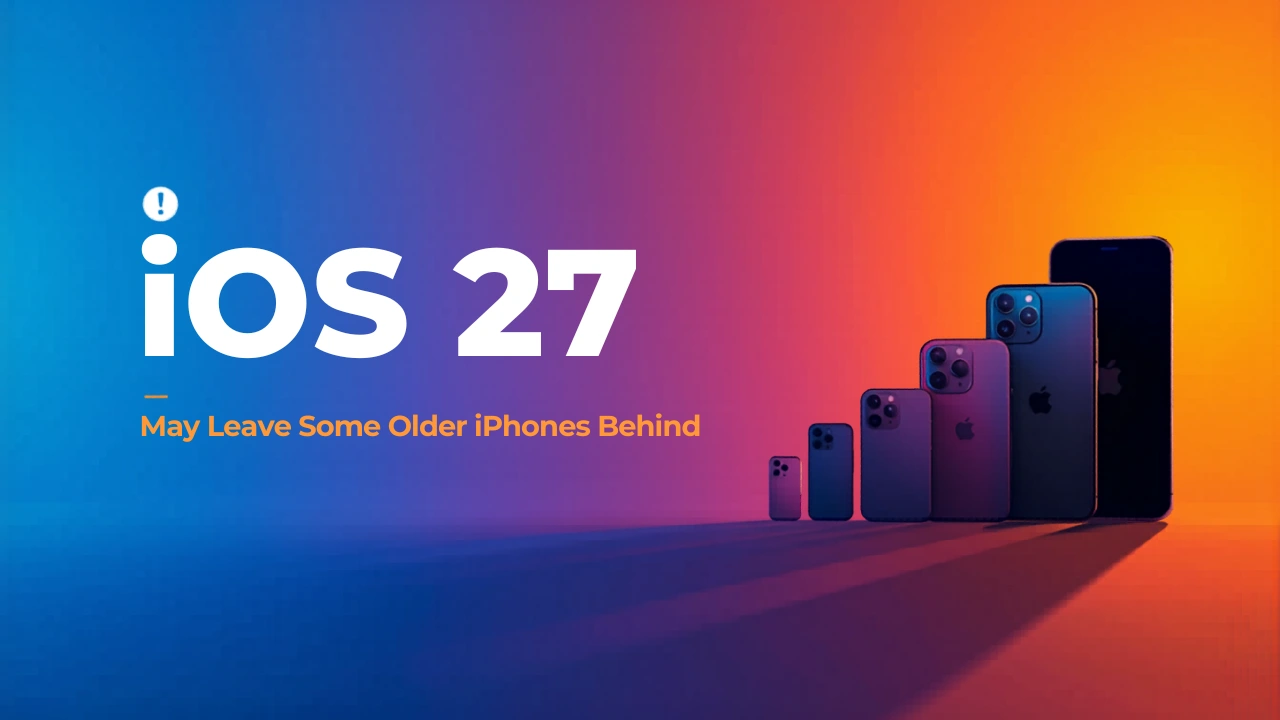
Apple users around the world are waiting for the launch of iOS 27. Every year, Apple introduces a new iOS update with exciting features, better security, and improved performance. But along with new features, some older iPhones usually lose support for the latest software updates.
According to recent leaks and reports, iOS 27 may not support some older iPhone models. This news has disappointed many users who still use older devices like the iPhone 11 series and iPhone SE 2.
In this blog, we will explain which iPhones may miss the iOS 27 update, why Apple stops supporting older devices, what it means for users, and what you should do if your iPhone is no longer eligible.
What is iOS 27?
iOS 27 is Apple’s upcoming operating system for iPhones. It is expected to be officially announced during Apple’s Worldwide Developers Conference (WWDC) 2026.
The new update is likely to bring several improvements, including:
- Better AI-powered features
- Improved battery optimization
- Enhanced privacy and security
- Faster app performance
- Updated Siri features
- New customization options
- Better multitasking experience
Apple releases a new iOS version every year to improve user experience and keep devices secure.
Which iPhones May Not Get iOS 27?
Reports suggest that Apple may stop support for some older iPhones with the iOS 27 update.
The models likely to miss the update are:
iPhone Models Expected to Lose iOS 27 Support
- iPhone 11
- iPhone 11 Pro
- iPhone 11 Pro Max
- iPhone SE (2nd Generation)
These devices were launched in 2019 and 2020. Although they still work well for everyday use, Apple may consider them too old for the latest software features.
Why Apple Stops Supporting Older iPhones
Many users wonder why Apple stops giving updates to older devices. The main reason is hardware limitations.
New iOS versions require:
- Faster processors
- Better AI capabilities
- More RAM
- Improved graphics performance
- Advanced security systems
Older iPhones may not have enough power to handle the latest features smoothly. To maintain performance and user experience, Apple eventually removes support for older models.
This is common in the smartphone industry, and even Android brands stop updates after a few years.
Which iPhones Will Likely Support iOS 27?
If the leaks are correct, iOS 27 will likely support:
- iPhone 12 series
- iPhone 13 series
- iPhone 14 series
- iPhone 15 series
- iPhone 16 series
- iPhone SE (3rd Generation)
- Future iPhone models
Apple is expected to support devices with the A14 Bionic chip and newer processors.
What Happens if Your iPhone Does Not Get iOS 27?
If your iPhone is not eligible for iOS 27, it does not mean your device will stop working.
You can still:
- Make calls
- Use apps
- Browse the internet
- Take photos
- Use social media
- Watch videos
However, there are some limitations.
Things You May Miss
1. New Features
You will not get the latest iOS 27 features and improvements.
2. Security Updates
Over time, security updates may also stop, which can make the device less secure.
3. App Compatibility
Some apps may eventually stop supporting older iOS versions.
4. Performance Improvements
Your device may not receive future speed and battery optimizations.
Should You Upgrade Your iPhone?
If you are using an iPhone 11 or older device, you may start thinking about upgrading.
However, you do not need to rush immediately. Older iPhones can still work well for daily tasks.
You should consider upgrading if:
- Your battery drains quickly
- Apps crash frequently
- Storage is full
- Performance feels slow
- You want the latest AI features
- Security is important for your work
For users who want long-term software support, upgrading to an iPhone 13 or newer may be a smart choice.
How Long Does Apple Usually Support iPhones?
Apple is known for providing long software support compared to most smartphone brands.
Most iPhones receive:
- Around 5 to 7 years of iOS updates
- Additional security updates after major support ends
For example:
- iPhone 6s received updates for many years
- iPhone X also received long-term support
This is one reason why many users prefer iPhones over Android devices.
Expected Features in iOS 27
Although Apple has not officially revealed all features, rumors suggest iOS 27 could include:
AI-Powered Siri
Apple may introduce smarter Siri features powered by artificial intelligence.
Better Battery Management
Users may get improved battery health tools and optimization.
Improved Privacy
Apple continues focusing on user privacy and app tracking control.
Advanced Customization
New home screen and lock screen customization options may arrive.
Smarter Notifications
AI-based notification summaries could become more advanced.
Improved Gaming Experience
Apple may optimize gaming performance for newer iPhones.
When Will Apple Officially Announce iOS 27?
Apple is expected to reveal iOS 27 during WWDC 2026 in June.
After the announcement:
- Developers will get beta access first
- Public beta versions may arrive later
- Official release could happen around September 2026
The stable version usually launches alongside new iPhone models.
What Should iPhone 11 Users Do Now?
If you currently use an iPhone 11, there is no need to panic.
Here are some practical steps:
Keep Your Device Updated
Install the latest available iOS updates for security improvements.
Check Battery Health
Replacing the battery can improve performance significantly.
Free Up Storage
Delete unused apps and files for smoother performance.
Backup Important Data
Always keep your photos and files backed up to iCloud or another service.
Plan for Future Upgrade
You can start planning for a future device upgrade if needed.
The upcoming iOS 27 update may mark the end of software support for some older iPhones, including the iPhone 11 series and iPhone SE 2. While this may disappoint some users, it is a normal part of Apple’s software cycle.
The good news is that unsupported iPhones will still work for regular daily use. However, users may eventually miss new features, security improvements, and app compatibility updates.
Apple is expected to officially confirm the supported devices during WWDC 2026. Until then, these reports remain leaks and rumors.
If you own an older iPhone, now may be a good time to think about future upgrade options while continuing to enjoy your current device.