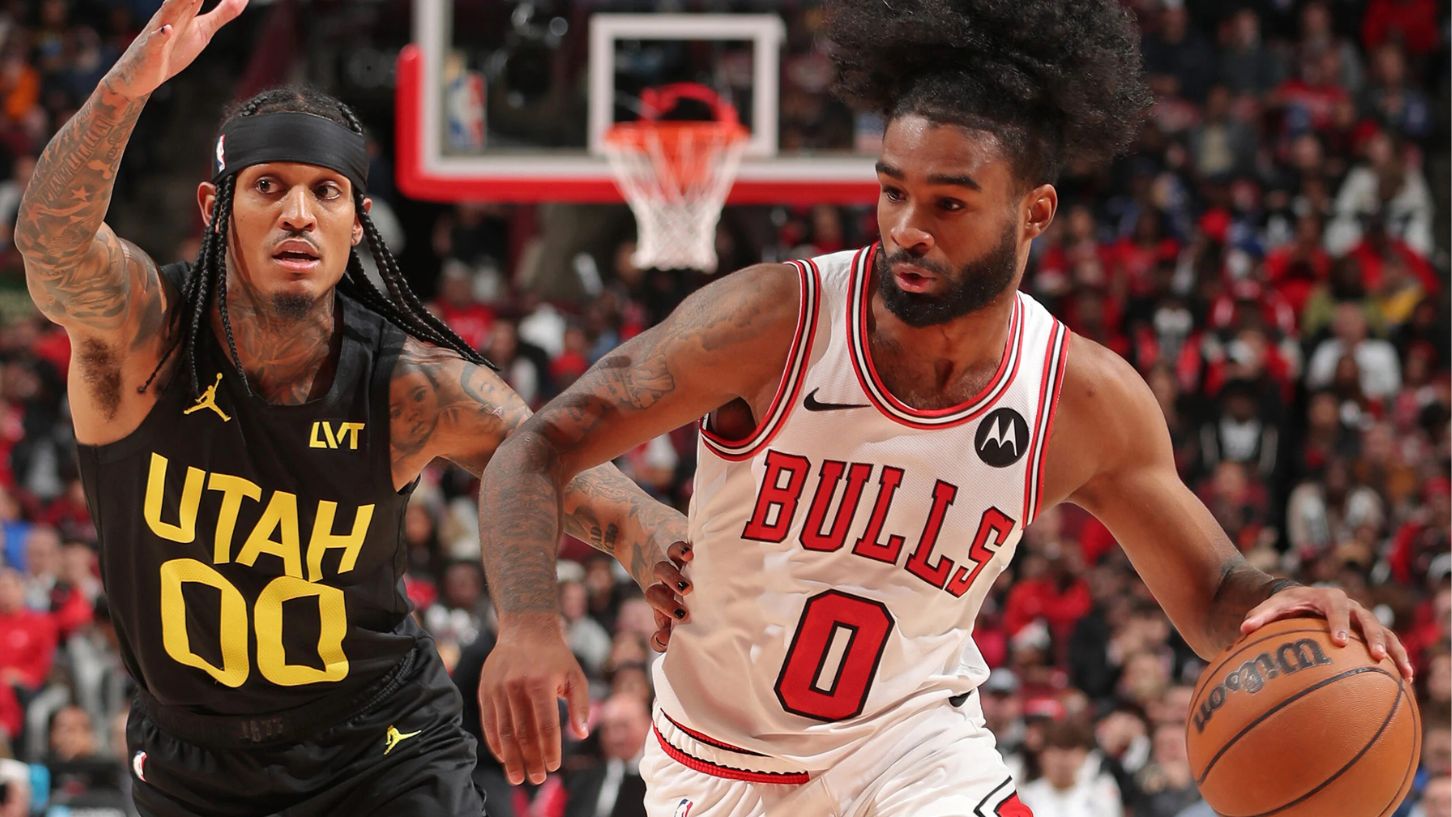
Utah Jazz Chicago Bulls injury report — that’s the big headline today as both teams shared important updates before their upcoming clash. These injury news items aren’t just minor footnotes; they could seriously shape how each side plays, who steps up, and potentially how the game might swing. In this blog, I’ll walk you through what these updates mean, why they matter, and how they could affect both team dynamics — all in simple, clear language.
Utah Jazz Chicago Bulls Injury Report: What’s Going On
At the beginning of the content, it’s important to highlight the focus: Utah Jazz, Chicago Bulls injury report. That’s what everyone’s talking about, and rightly so — key players are out or questionable, and these shifts can change the flow of the game.
Jazz’s Frontcourt Takes a Hit
On the Utah side, the injury report is not exactly rosy. Taylor Hendricks is out with a hamstring issue. When your young forward can’t contribute, that’s a big missing piece. Georges Niang is also out, recovering from a foot injury. That’s two forwards down.
To make matters tougher, Walker Kessler (center) is out due to a shoulder injury. In a sport where size in the paint matters, losing Kessler limits Utah’s ability to dominate the boards or protect the rim. Even their two-way center, Oscar Tshiebwe, is unavailable. That’s weakening their depth considerably.
Meanwhile, Kyle Anderson—a veteran forward—was initially listed as questionable with back soreness. That presented some hope: if he plays, his experience could help fill gaps. But in a later update, he’s been ruled out for the matchup due to “lower back injury management.” That’s a blow — Utah doesn’t just lose physical talent, but also the calming presence Anderson brings to the rotation.
Bulls’ Backcourt Sees Some Movement
On the Chicago Bulls’ side, the injury report brings its own drama. Zach Collins is out with a wrist injury following surgery, so the Bulls are missing frontcourt size.
In the backcourt, there’s a mix of caution and optimism. Tre Jones is listed as questionable with an ankle issue, while Josh Giddey is probable. That’s encouraging, because Giddey has been playing really well — averaging near-triple-double numbers this season. Having him likely to play gives Chicago a strong playmaker.
Then there’s Coby White, whose status has been upgraded to questionable. He hasn’t played yet this season because of a calf strain. But his possible return could be a real shot in the arm for the Bulls’ offense — especially since he averaged over 20 points per game last season. On the downside, Emanuel Miller and Trentyn Flowers (both two-way players) are out, further limiting the depth.
Why These Injury Updates Matter
These injury updates are more than just names on a list — they have real strategic and emotional implications:
- Team Depth and Rotation
The Jazz are severely stretched in their frontcourt. With Hendricks, Niang, and Kessler out, they’ll likely lean more heavily on players like Lauri Markkanen, Kyle Filipowski, or Ace Bailey. That could disrupt their usual rotation and tire out the remaining bigs. It’s like if you’re playing a soccer match and your main strikers suddenly can’t play — the forwards you rely on must step up, and sometimes they play more than you’re comfortable with.
- Matchup Dynamics
On the Bulls’ side, if Giddey plays, he gives them a dynamic guard who can pass, rebound, and score. That could force the Jazz to adjust their defensive strategy. Also, if White suits up, Chicago’s scoring options improve significantly. Imagine a game where one team is down in the paint but gains backcourt strength — that shift can change who controls tempo.
- Psychological Impact
Injuries affect not just bodies but minds. For the Jazz, losing key frontcourt players could hurt morale, especially if they feel they’re not at full strength. For the Bulls, having Giddey likely to play might boost confidence. White’s potential return could feel like a morale-boosting homecoming. These emotional swings can influence how aggressively teams play.
- Longer-Term Implications
These aren’t just one-game issues. If some of the Jazz players remain out for multiple games, their season could be impacted. For Chicago, if Collins’ wrist injury lingers (he’s out for “multiple weeks” according to the report), they’ll need to find other consistent sources of frontcourt production.
A Real-World Example: How Injuries Shifted a Previous Game
To make this more concrete, let’s look back at a prior game between these two teams. When Coby White was out in earlier matchups, Chicago had to lean heavily on Giddey and other role players to fill the scoring void. Without White’s scoring punch, the Bulls’ offense looked less explosive and more predictable. On the other hand, in a game where Utah lost Kessler and Hendricks, their interior defense weakened, and Chicago had an easier time attacking the rim. That previous scenario illustrates exactly why these injury reports are not just technical updates — they change how the game plays out.
Why Fans Should Care
If you’re a fan of either team — or just an NBA fan — updates like these can help you:
- Understand the stakes: Knowing who’s injured helps you predict how competitive the game will be.
- Gauge player opportunities: Young or bench players might get more minutes. For instance, if Anderson is out, someone like Filipowski might play more.
- Bet more wisely: Whether fantasy, spreads, or just friendly bets, injury status influences likely outcomes.
- Follow storylines: Fans love narratives — a veteran coming back, a young player stepping up, or teams adapting to adversity.