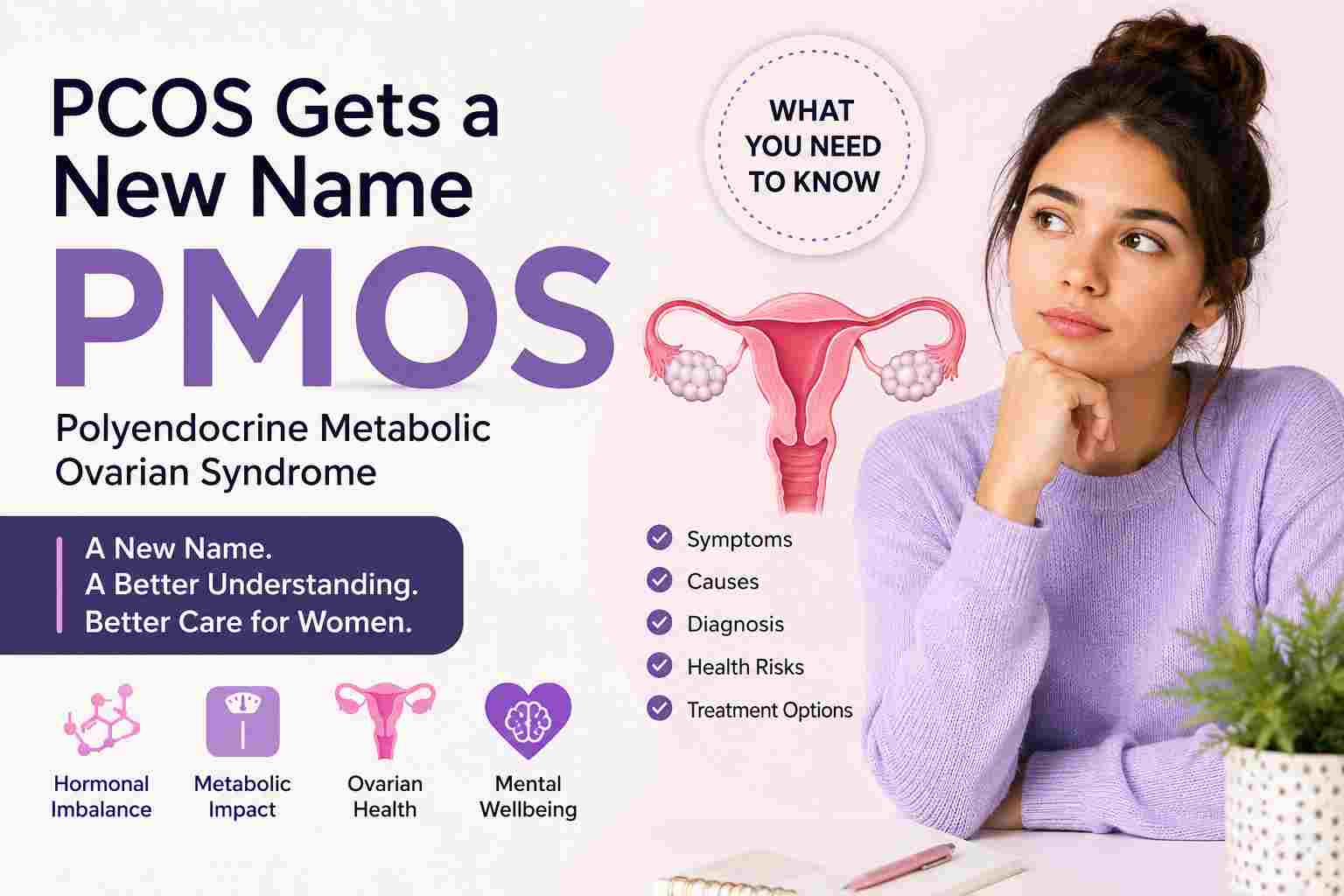
A major change in women’s health terminology is making headlines worldwide. The condition long known as Polycystic Ovary Syndrome (PCOS) is now being renamed Polyendocrine Metabolic Ovarian Syndrome (PMOS) after years of global medical research and patient advocacy.
Health experts say the new name more accurately reflects the condition’s complex hormonal and metabolic effects rather than focusing only on ovarian cysts. The move is expected to improve awareness, reduce stigma, encourage earlier diagnosis, and lead to better treatment approaches for millions of women globally.
What Is PMOS?
Previously known as PCOS, PMOS is a long-term hormonal and metabolic disorder that affects women during their reproductive years. The condition impacts several systems in the body, including:
- Hormones
- Metabolism
- Reproductive health
- Skin and hair health
- Mental wellbeing
Experts estimate that more than 170 million women worldwide are affected by the condition, making it one of the most common hormonal disorders globally.
PMOS can cause irregular ovulation, infertility, insulin resistance, weight gain, acne, excessive hair growth, and increased risks of diabetes and cardiovascular disease.
Why Was PCOS Renamed?
Medical researchers and patients argued for years that the term “Polycystic Ovary Syndrome” was misleading.
The word “polycystic” suggested that ovarian cysts were the main defining feature of the condition. However, many women diagnosed with PCOS never actually develop ovarian cysts. In many cases, what appears on ultrasound are immature follicles rather than true cysts.
Experts also noted that the old name failed to recognize the disorder’s broader metabolic and endocrine impacts.
The new term — Polyendocrine Metabolic Ovarian Syndrome (PMOS) — was chosen because it better reflects the reality that the disorder affects multiple hormone systems and metabolic functions throughout the body.
Meaning Behind the New Name PMOS
The new terminology breaks down into several important components:
Polyendocrine
This highlights that multiple hormone-producing systems are involved, not just the ovaries.
Metabolic
This reflects the strong connection between the condition and metabolic issues such as:
- Insulin resistance
- Obesity
- Type 2 diabetes
- High cholesterol
- Cardiovascular risk
Ovarian
The ovaries remain an important part of the condition because ovulation and reproductive health are often affected.
Syndrome
This indicates that the condition includes a collection of symptoms that vary from person to person.
Researchers believe the new name provides a more scientifically accurate understanding of the disorder.
A 14-Year Global Effort
The renaming process was not sudden. It followed a massive international collaboration involving:
- More than 50 medical and patient organizations
- Thousands of healthcare professionals
- Over 14,000 patient responses
- Researchers across six continents
The initiative was led by experts including Professor Helena Teede of Monash University in Australia. The findings and consensus were published in The Lancet and presented during the European Congress of Endocrinology.
Medical organizations plan to fully transition to the PMOS terminology by 2028.
Common Symptoms of PMOS
Symptoms can vary significantly between individuals, which is one reason the condition is often difficult to diagnose.
Some of the most common symptoms include:
Irregular Menstrual Cycles
Many women experience:
- Missed periods
- Infrequent periods
- Heavy bleeding
- Unpredictable cycles
Fertility Problems
PMOS is one of the leading causes of infertility because irregular ovulation can make conception difficult.
Excess Hair Growth
Higher androgen levels may cause:
- Facial hair
- Chest hair
- Hair growth on the abdomen or thighs
Acne and Oily Skin
Hormonal imbalances can trigger persistent acne, especially around the jawline and chin.
Hair Thinning
Some women experience scalp hair loss or thinning similar to male-pattern baldness.
Weight Gain and Insulin Resistance
Many patients struggle with:
- Weight management
- Increased abdominal fat
- Difficulty processing carbohydrates
Mental Health Challenges
Research shows links between PMOS and:
- Anxiety
- Depression
- Low self-esteem
- Eating disorders
Why PMOS Often Goes Undiagnosed
Experts estimate that up to 70% of cases remain undiagnosed worldwide.
Several factors contribute to delayed diagnosis:
- Symptoms differ widely among patients
- Many symptoms overlap with other conditions
- The old name caused confusion
- Some women assume irregular periods are normal
- Healthcare providers may focus only on reproductive symptoms
Doctors hope the new PMOS terminology will help improve understanding among both patients and medical professionals.
Health Risks Linked to PMOS
Beyond reproductive issues, PMOS can increase the risk of serious long-term health complications.
Type 2 Diabetes
Insulin resistance is common and significantly raises diabetes risk.
Heart Disease
Women with PMOS may face increased risks of:
- High blood pressure
- Elevated cholesterol
- Cardiovascular disease
Sleep Disorders
Sleep apnea is more common among individuals with metabolic complications.
Pregnancy Complications
PMOS may increase risks during pregnancy, including:
- Gestational diabetes
- High blood pressure
- Preterm birth
Endometrial Cancer
Irregular ovulation can increase the risk of abnormal uterine lining growth over time.
How PMOS Is Diagnosed
Doctors typically diagnose the condition using the Rotterdam Criteria, which require at least two of the following:
- Irregular ovulation or menstrual cycles
- Elevated androgen levels or symptoms
- Polycystic ovaries seen on ultrasound
Blood tests, hormone evaluations, and metabolic screenings are often used as part of the diagnostic process.
Treatment Options for PMOS
There is currently no cure for PMOS, but symptoms can often be managed successfully through lifestyle changes and medical treatment.
Lifestyle Modifications
Doctors commonly recommend:
- Regular exercise
- Balanced nutrition
- Weight management
- Better sleep habits
- Stress reduction
Medications
Depending on symptoms, treatments may include:
- Birth control pills
- Metformin
- Anti-androgen medications
- Fertility treatments
- Acne medications
Mental Health Support
Therapy and emotional support can help manage the psychological effects of the condition.
Why the Name Change Matters
Experts believe the transition from PCOS to PMOS could have major benefits for patient care.
Improved Awareness
The new name explains the condition more accurately and may help the public better understand its seriousness.
Earlier Diagnosis
Healthcare professionals may identify symptoms sooner if they recognize the condition as a broader endocrine and metabolic disorder.
Reduced Stigma
Many patients reported frustration and confusion with the previous terminology. The updated name may help validate their experiences.
Better Research and Treatment
Researchers hope the new classification will encourage more funding and innovation for treatment options.
The Future of PMOS Awareness
Healthcare organizations worldwide are now preparing educational campaigns and updated clinical guidelines to support the transition to PMOS over the next few years.
Experts believe this change marks an important turning point in women’s healthcare. By recognizing the condition as a complex endocrine and metabolic disorder rather than simply an ovarian issue, medical professionals hope to provide more personalized and effective care for millions of patients worldwide.