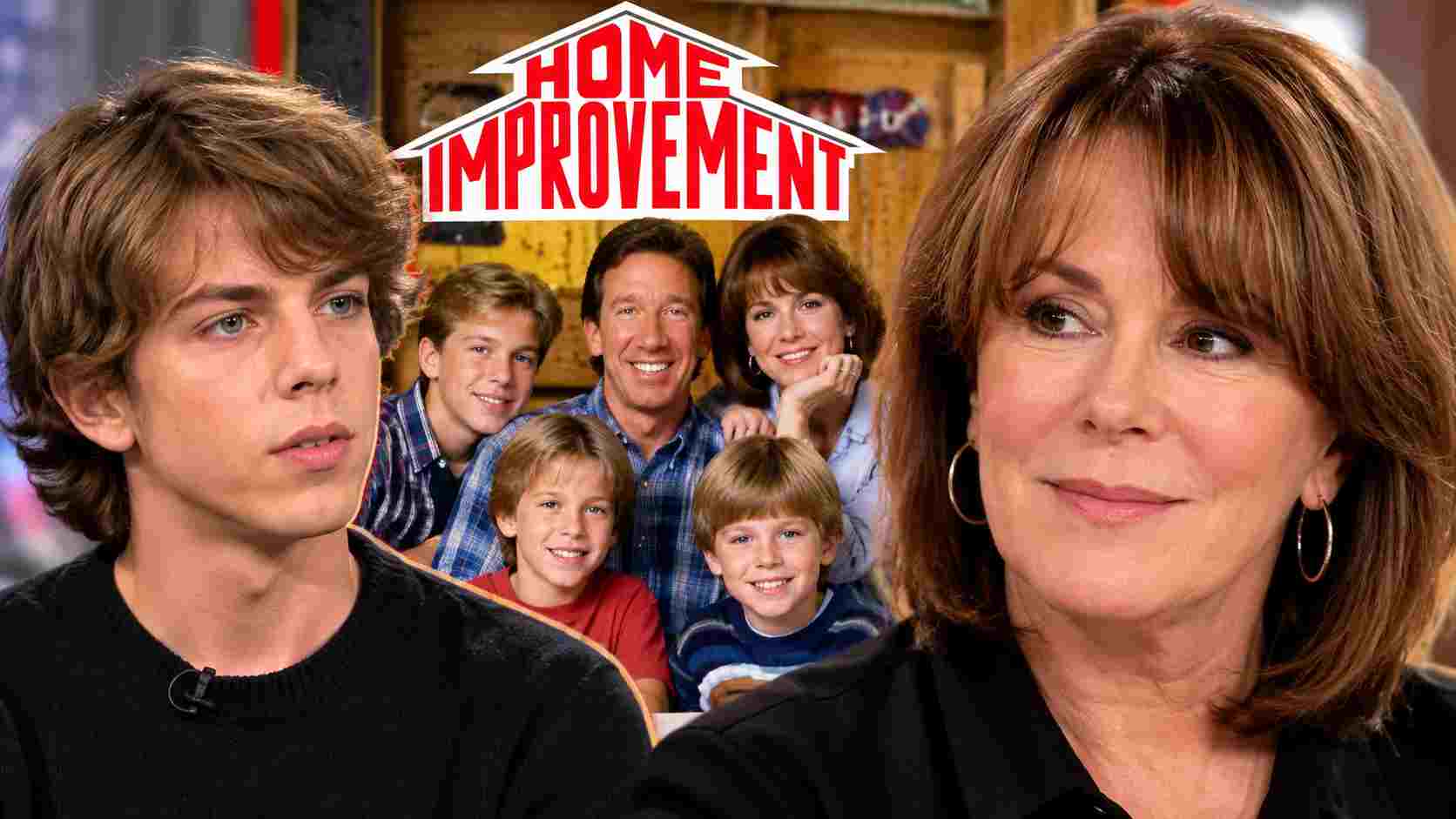
Nearly three decades after Home Improvement ended its hugely successful television run, new comments from former child star Taran Noah Smith are bringing renewed attention to the circumstances surrounding Patricia Richardson’s departure from the beloved 1990s sitcom.
Richardson, who played Jill Taylor opposite Tim Allen’s Tim “The Tool Man” Taylor, became one of the defining faces of the ABC series during its eight-season run. Although the show remained enormously popular, Richardson ultimately chose not to return for a proposed ninth season.
Now Smith, who portrayed the Taylor family’s youngest son, Mark, has offered his perspective on what was happening behind the scenes.
Speaking on the Outgrown podcast, Smith recalled Richardson repeatedly pushing for the Taylor family — and Jill in particular — to be portrayed in a believable way. He suggested that years of advocating for realistic writing contributed to Richardson becoming exhausted with the series.
Richardson herself has previously explained that her decision involved several factors, including her family, the direction of the show, her creative contribution and a major pay disparity between her and Allen.
Together, the accounts offer a more detailed picture of why one of television’s biggest sitcoms ended while it was still a major part of American pop culture.
Taran Noah Smith Reflects on Patricia Richardson’s Role
Smith was only seven years old when he began playing Mark Taylor on Home Improvement.
Looking back on the production as an adult, he said Richardson brought something particularly important to the Taylor family dynamic: real-life parenting experience.
Richardson was brought into the project shortly before the pilot was filmed, replacing Frances Fisher, who had initially been cast in the role of Tim Taylor’s wife.
Smith recalled that Richardson immediately had strong chemistry with the rest of the cast.
More importantly, in his view, she brought authenticity to Jill.
At the time, Richardson was a mother herself, and Smith said she frequently challenged material she believed did not sound or feel like something a real mother would say.
According to Smith, Richardson would push writers to revise dialogue or situations when she felt they sacrificed character consistency simply to deliver a joke.
That effort became an important part of how Jill Taylor developed over the show’s run.
Richardson Wanted Jill Taylor to Feel Like a Real Person
Jill Taylor could easily have become a conventional sitcom character whose primary role was reacting to her husband’s mistakes.
Instead, Jill developed her own identity, opinions, career ambitions and family storylines.
Richardson has previously said she did not want to play what she described as a “thankless wife.”
In a 2024 interview with the Los Angeles Times, she recalled being told when she accepted the role that Home Improvement was not supposed to function solely as a vehicle for Tim Allen. The relationship between Tim and Jill was intended to be central to the series.
That made Richardson protective of her character.
She sometimes disagreed with the writers about how Jill should react to particular situations and worked to ensure that the character remained consistent.
Smith’s latest recollections support the broader picture Richardson previously presented: she was not simply performing scripts but was actively concerned about whether the Taylor family felt authentic.
Changes Behind the Scenes Created New Challenges
Smith also recalled changes to the show’s writing and production team as Home Improvement progressed.
According to him, after some of the original creative personnel moved on, new writers and producers joined the sitcom.
Smith said Richardson increasingly became the person pushing back when proposed jokes or story ideas appeared inconsistent with characters the audience had already spent years getting to know.
From Smith’s perspective, that responsibility eventually became tiring.
He suggested that continually having to argue for believable characterization was one factor that contributed to Richardson no longer wanting to continue.
However, that is Smith’s recollection of the situation rather than Richardson’s sole stated explanation for leaving.
Richardson has publicly described several additional reasons for her decision.
Why Did Patricia Richardson Leave ‘Home Improvement’?
Richardson had already decided during the show’s eighth season that she was ready to leave.
Her decision was influenced partly by her personal life.
Following her divorce from actor Ray Baker, Richardson wanted more time with her children. Producing a major network sitcom required a demanding schedule, and after years on the show she was increasingly reluctant to commit to another full season.
She also believed Home Improvement had reached a natural endpoint.
Jonathan Taylor Thomas, who played middle son Randy Taylor, had already stepped away from his regular role during the eighth season.
Richardson felt that the changes surrounding the series were signs that it was time to finish the story rather than extend it simply because the show remained commercially valuable.
Then came a major contract proposal.
The Proposed $1 Million-Per-Episode Deal
One of the most striking elements of the story involves the amount of money reportedly offered for a ninth season.
Richardson told the Los Angeles Times in 2024 that ABC wanted the stars back for another 25 episodes.
According to Richardson’s account, she was offered approximately $1 million per episode, while Tim Allen was offered approximately $2 million per episode.
A 25-episode season under that proposal would have represented an enormous payday.
But Richardson said money alone was not enough to persuade her to return.
Instead, she made a counterproposal.
Richardson Asked for Equal Pay With Tim Allen
Richardson said she would agree to another season if she received the same reported $2 million-per-episode salary offered to Allen and an executive producer credit.
But she has also acknowledged that she did not expect the studio to accept those terms.
In other words, the counteroffer effectively provided a way for Richardson to stand by her decision to leave while also highlighting what she saw as an unequal relationship between the two stars.
Richardson said she believed her contribution to Home Improvement was significant and that she had never been compensated at a level comparable to Allen.
Her proposed terms were not accepted, and Home Improvement ended after Season 8.
Richardson’s account of the proposed salaries was reported by the Los Angeles Times and has subsequently been covered by multiple entertainment outlets.
Creative Recognition Was Also an Issue
Salary was not Richardson’s only concern.
She also believed her behind-the-scenes contributions deserved greater formal recognition.
Richardson had considerable input into Jill Taylor and the character’s stories, but she did not receive the executive producer status she wanted.
Allen, meanwhile, eventually became an executive producer on the series.
Richardson told the Los Angeles Times that she felt her work was important to the show’s appeal, particularly among female viewers.
That history provides important context for why she included an executive producer credit alongside equal pay in her proposed terms for Season 9.
For Richardson, the issue was therefore not simply about receiving a larger paycheck. It was also about how her creative contribution to the show was valued.
Smith Says Richardson Became ‘Tired’ of the Fight
Smith’s new comments add another perspective to the story.
He remembers Richardson regularly being the cast member who challenged scripts when the behavior of Jill or other members of the Taylor family did not seem believable.
In Smith’s telling, doing that repeatedly became exhausting.
He believes that fatigue was among the factors behind the show’s eventual conclusion.
Smith also suggested that Allen generally took a more hands-off approach to some creative disputes.
That characterization should be understood specifically as Smith’s recollection rather than a definitive statement about Allen’s motivations.
Still, his comments help explain how Richardson’s influence may have extended beyond what audiences saw on screen.
Tim Allen and Patricia Richardson Became One of TV’s Most Recognizable Couples
The creative partnership between Richardson and Allen was central to the success of Home Improvement.
Allen played Tim Taylor, a tool-loving television personality whose confidence frequently exceeded his actual ability to complete home projects safely.
Richardson’s Jill provided a counterbalance.
Instead of functioning only as the person who reacted to Tim’s antics, Jill was frequently written as practical, intelligent and willing to challenge her husband.
Their marriage provided both comedy and emotional material throughout the series.
Richardson’s performance also received significant industry recognition. She earned multiple Primetime Emmy nominations for playing Jill Taylor.
How Successful Was ‘Home Improvement’?
Home Improvement premiered on ABC in 1991 and quickly became one of the defining American family sitcoms of the decade.
The series followed Tim and Jill Taylor as they raised their three sons — Brad, Randy and Mark — while navigating marriage, parenting and Tim’s television career.
Zachery Ty Bryan played Brad, Jonathan Taylor Thomas portrayed Randy and Taran Noah Smith played Mark.
Richard Karn became another major part of the series as Al Borland, Tim’s more knowledgeable Tool Time co-host.
Earl Hindman played the Taylors’ famously mysterious neighbor Wilson, whose face was routinely partially hidden from viewers.
The series ultimately ran for eight seasons and 204 episodes, concluding in 1999.
Its combination of family comedy, physical humor and recognizable domestic conflicts made it one of the most prominent sitcoms of the 1990s.
Could ‘Home Improvement’ Have Continued Without Jill?
Technically, a television network could have attempted to continue the series without Richardson.
Creatively, however, losing Jill Taylor would have fundamentally changed the show.
The relationship between Tim and Jill was one of the central foundations of Home Improvement. Removing one half of that partnership would have required a major restructuring.
People involved with the original series have also questioned whether continuing without Richardson would have made sense.
Former executive producer Elliot Shoenman told the Los Angeles Times in 2024 that proceeding without her did not make sense, while co-creator and executive producer Carmen Finestra said he did not remember serious discussions about carrying on without Richardson.
That context helps explain why Richardson’s decision effectively coincided with the end of the sitcom.
Patricia Richardson and Tim Allen Reunited Years Later
The end of Home Improvement was not the last time Richardson and Allen worked together.
Richardson later appeared on Allen’s sitcom Last Man Standing, giving longtime Home Improvement fans a chance to see the former co-stars share the screen again.
Despite disagreements surrounding the conclusion of their original show, Richardson has spoken positively about Allen’s abilities as a performer.
Their professional history is therefore more complicated than a simple story of two co-stars falling out.
Richardson’s criticism has largely focused on the circumstances surrounding the show, compensation and creative decision-making rather than denying the successful chemistry she and Allen had as performers.
Richardson Has Been Skeptical About a ‘Home Improvement’ Reboot
Nostalgia has brought numerous television shows from the 1980s, 1990s and 2000s back to screens, leading to recurring speculation about whether Home Improvement could eventually receive similar treatment.
Richardson, however, has previously expressed skepticism about reviving the sitcom.
Recreating the original series would also be complicated by how much time has passed and by changes affecting the cast.
For Richardson, the original show’s legacy appears to be closely connected to the particular chemistry and circumstances that existed during its original eight-season run.
Taran Noah Smith’s Comments Renew Interest in the Show’s Ending
Smith’s latest remarks are significant because they come from someone who spent his childhood working alongside Richardson and Allen.
His recollections do not replace Richardson’s own explanation for leaving.
Instead, they add another perspective.
Richardson has described wanting more time with her family, believing the show had reached its endpoint, feeling that her creative work deserved more recognition and objecting to the large compensation difference between herself and Allen.
Smith now adds that viewers may not have realized how frequently Richardson advocated behind the scenes for believable family dynamics and consistent characterization.
Together, those accounts suggest that the ending of Home Improvement cannot be reduced to one contract negotiation or one disagreement.
Why the Story Still Resonates Decades Later
The renewed interest in Richardson’s departure also highlights a broader question about television history: how much influence performers have over characters once a successful series becomes a major commercial property.
Richardson was not simply deciding whether to accept another acting job.
After eight seasons, she had spent years developing Jill Taylor and helping establish the family dynamic at the center of the series.
Her comments about compensation and creative recognition show that decisions about continuing a successful television show can involve far more than ratings.
They can involve family priorities, creative control, professional recognition and the question of when a long-running story has simply reached its natural conclusion.
The Bottom Line
Taran Noah Smith’s new recollections have reopened discussion about why Home Improvement ended after eight seasons.
According to Smith, Patricia Richardson spent years pushing writers to keep Jill Taylor and the Taylor family believable, and he believes she eventually became exhausted by having to repeatedly fight those creative battles.
Richardson’s own account provides additional context.
She had already decided that she wanted to move on, wanted more time with her children and believed the sitcom should end. When ABC reportedly offered her $1 million per episode for a ninth season while offering Tim Allen $2 million, she countered by asking for equal compensation and an executive producer credit — terms she has said she expected the studio to reject.
The proposed ninth season never happened.
Instead, Home Improvement concluded in 1999 after 204 episodes, leaving behind one of the most recognizable television families of the 1990s — and a behind-the-scenes story that continues to attract attention decades later.