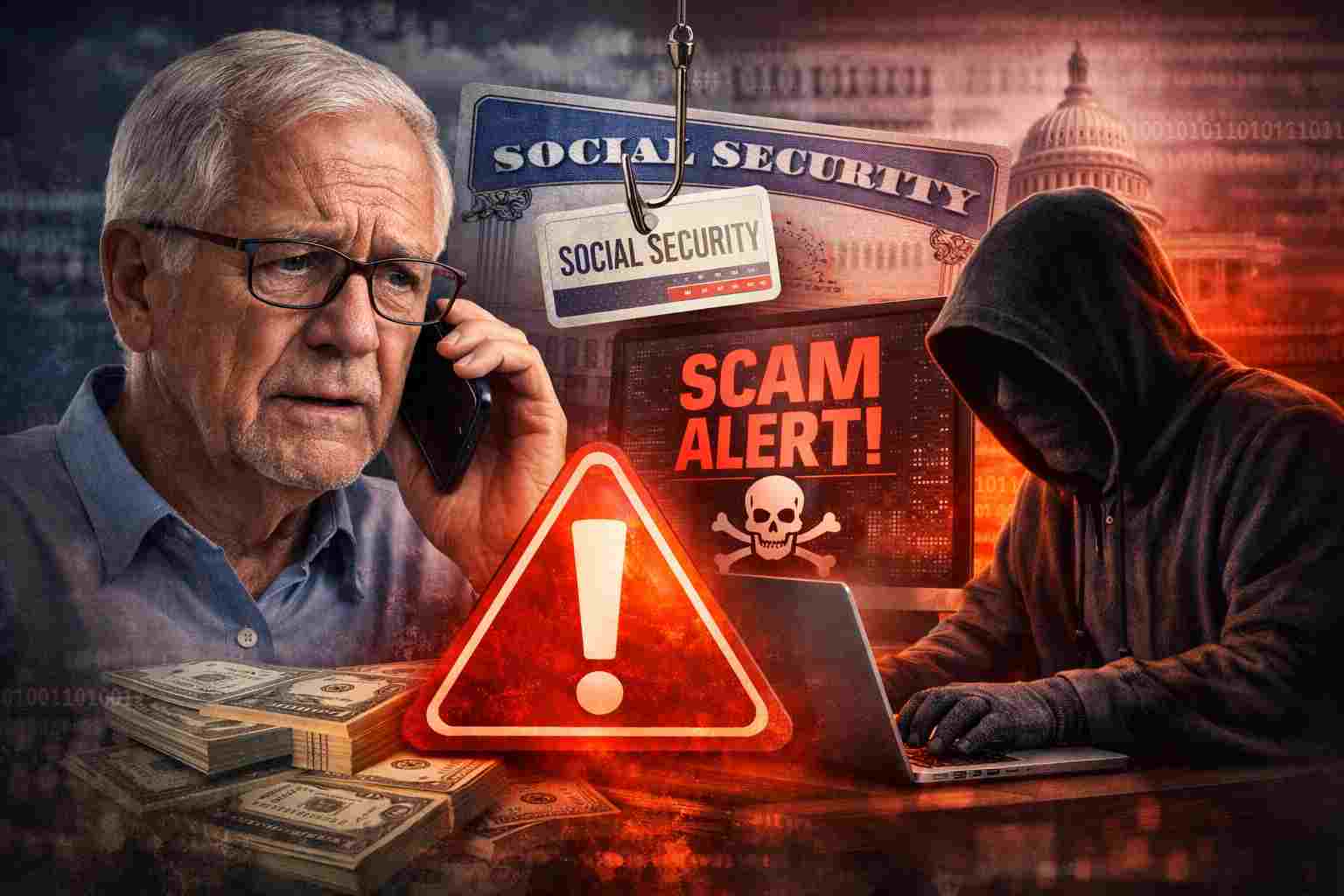
The Social Security Administration (SSA) has issued a strong warning to retirees across the United States following a noticeable rise in scam activities targeting beneficiaries. Officials are urging millions of Americans to remain cautious as fraudsters develop increasingly sophisticated tactics to steal personal and financial information.
Rising Threat to Millions of Retirees
Social Security remains a crucial financial support system for over 70 million Americans, including retirees, disabled individuals, and survivors. Because many seniors rely heavily on these monthly payments, scammers see them as easy targets.
Authorities say the recent surge in scams is particularly alarming due to the level of sophistication being used. Fraudsters are no longer relying on simple phishing emails—they are now impersonating real SSA officials and using convincing communication methods to deceive victims.
How the Scam Works
According to officials, scammers are posing as representatives from the SSA and contacting retirees through phone calls, emails, or messages. These fraudulent communications often appear legitimate and may even include:
- Fake Social Security statements
- Names or photos of actual SSA employees
- Official-looking documents or emails
The goal is to trick individuals into sharing sensitive information such as Social Security numbers, bank details, or login credentials. In some cases, victims are pressured to send money through wire transfers or gift cards.
Key Warning Signs Identified by Authorities
The SSA has highlighted several red flags that retirees should watch for:
- Unsolicited contact claiming to be from a government agency
- Urgent demands for payment or personal information
- Requests to pay using gift cards or wire transfers
- Messages creating fear, such as threats of legal action
Officials stress that legitimate government agencies typically do not ask for immediate payments or sensitive information over phone calls or emails.
Why Seniors Are Being Targeted
Retirees are often targeted because they depend on Social Security benefits as a primary source of income. This makes them more likely to respond quickly to messages related to their benefits.
Additionally, scammers exploit trust and urgency, knowing that seniors may act quickly to avoid potential disruptions in their payments.
How to Stay Safe
Authorities recommend the following steps to protect against Social Security scams:
- Avoid responding to unexpected calls, texts, or emails
- Never share personal or financial details with unknown contacts
- Do not click on suspicious links or download attachments
- Verify all communications through official government websites
If a message seems suspicious, it is best to ignore it and report it immediately.