What Happened in the Binance Hack?
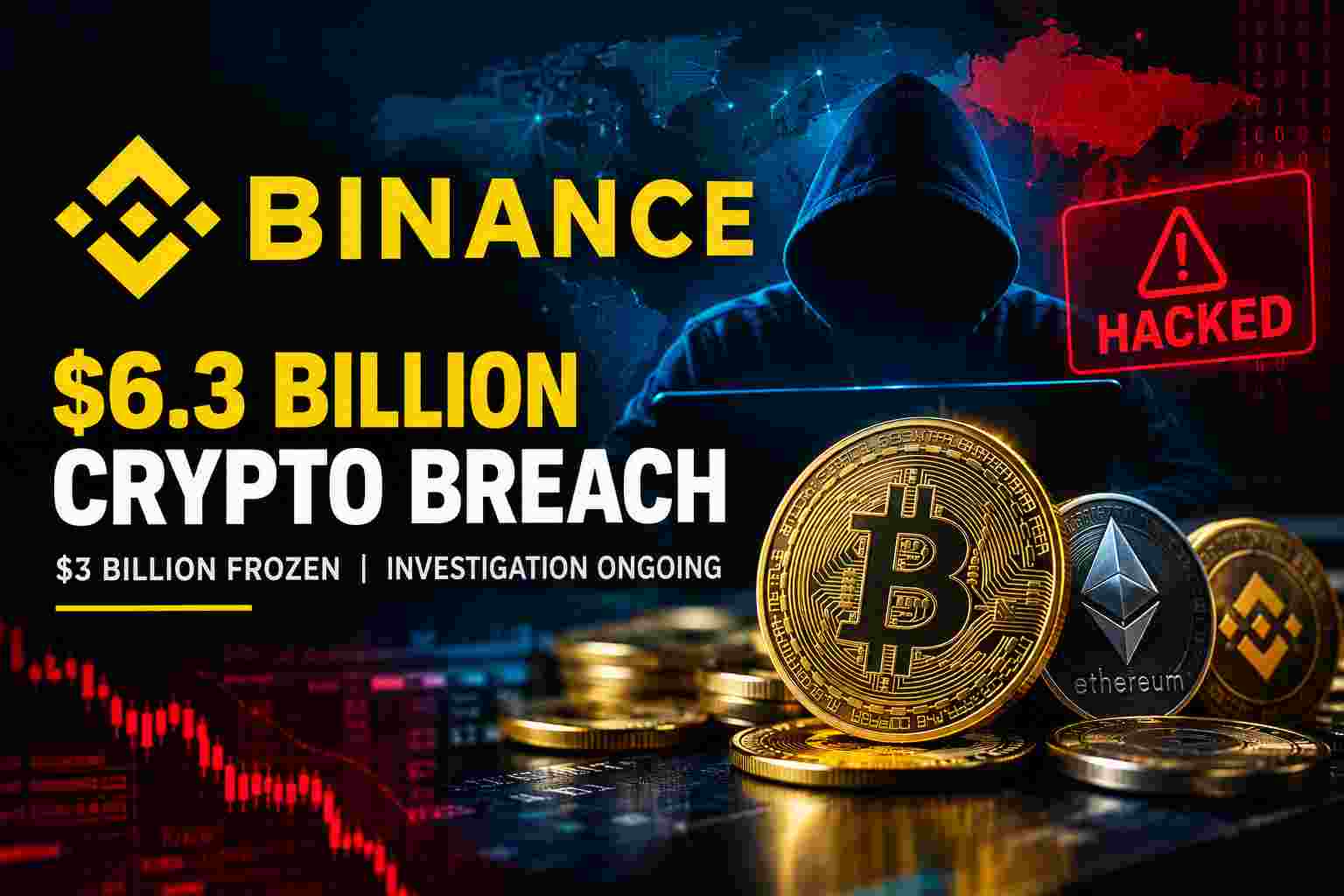
Binance, one of the world’s largest cryptocurrency exchanges, is investigating a major security incident after digital assets worth an estimated $6.3 billion were transferred out of its wallets.
The incident came to light on October 29, 2026, after unusual cryptocurrency movements raised concerns about the security of the exchange’s systems. Binance subsequently acknowledged the incident and announced emergency security measures.
In an update published on October 30, Binance said it had worked with blockchain partners to freeze approximately $3 billion in affected assets. The company also stated that it would cover all losses using its Secure Asset Fund for Users (SAFU) and company funds.
The investigation remains ongoing. Binance has not published its final technical report or confirmed the identities of those responsible.
The incident has raised important questions about cryptocurrency exchange security, the protection of customer assets, and the challenges of recovering stolen digital currencies.
How Did the $6.3 Billion Security Breach Happen?
Binance’s initial investigation points to a potentially compromised laptop belonging to a DevOps engineer.
According to the company’s official statement, the compromised device may have allowed an attacker to gain access to a service container and submit unauthorized withdrawal transactions.
DevOps teams typically work with the systems and infrastructure that keep online platforms operating. Access to these systems can be sensitive because they may connect software, deployment processes, and internal services.
However, Binance has not yet published enough technical evidence to establish the complete attack path.
The company later reported discovering additional points of breach. This suggests that investigators are examining a more complex incident than a problem involving a single device.
Blockchain intelligence firm TRM Labs reported that approximately $6.36 billion moved out of Binance wallets across multiple blockchains. The firm said most of the movement occurred within roughly 20 minutes.
These findings describe the scale and speed of the transfers. They do not, by themselves, establish every technical detail of how the attacker obtained the necessary access.
Binance has said it found no evidence that wallet private keys were leaked. It plans to release a detailed technical post-mortem after its investigation is complete.
Source: Binance’s official security incident update.
Who Is Behind the Binance Hack?
Blockchain intelligence companies have pointed to a North Korean-linked hacking group as a possible perpetrator.
TRM Labs attributed the incident to TraderTraitor, which it describes as a North Korean hacking unit. Chainalysis has also assessed that the attack was likely carried out by the same group.
These assessments are based on investigators’ analysis of blockchain transactions and similarities to earlier cryptocurrency thefts.
The suspected connection is significant because North Korean-linked cyber groups have been associated with previous attacks against cryptocurrency exchanges and other digital asset platforms.
One notable example was the February 2025 attack on cryptocurrency exchange Bybit. The US Federal Bureau of Investigation attributed that theft to North Korea-linked actors associated with TraderTraitor.
Investigators have identified similarities between the Binance incident and earlier attacks, including the movement of large quantities of digital assets through cryptocurrency wallets.
However, the suspected attribution must be treated carefully.
Binance has not publicly confirmed the identity of the attackers. The company says it is working with law enforcement and blockchain intelligence partners to identify those responsible.
The North Korea connection remains an assessment by blockchain analysis firms rather than a final public finding from Binance.
How Much Cryptocurrency Has Been Recovered?
Binance reported that approximately $3 billion in affected assets had been frozen on the blockchain by October 30.
The recovery effort involves cryptocurrency companies and other organizations that can help restrict the movement of certain digital assets.
Reuters reported that Tether had frozen nearly $1.57 billion in assets associated with the incident, while Circle had frozen more than $800 million. Other firms also reported taking action to restrict related funds.
These measures are important because some cryptocurrency issuers can blacklist specific addresses or prevent certain tokens from being transferred when their systems and applicable controls permit it.
Freezing assets does not necessarily mean the funds have been returned to their rightful owners. It generally means that the affected tokens have been restricted from further movement through the relevant controls.
The distinction matters because cryptocurrency thefts can involve several stages. Attackers may move funds between wallets, exchange one token for another, or transfer assets across different blockchain networks.
Investigators must trace these movements and coordinate with companies capable of restricting or recovering the affected assets.
Binance has not yet published a final accounting of the net losses, the total amount ultimately recovered, or the status of every affected asset.
The recovery figures may also change as more transactions are traced and additional assets are frozen.
Will Binance Customers Lose Their Money?
Binance has stated that customers will not bear the losses from the incident.
The exchange said it would cover all losses using its Secure Asset Fund for Users and company funds. Its announcement also said that an updated proof-of-reserves report would be published after the remediation process was complete.
SAFU is Binance’s emergency reserve intended to help protect users in certain circumstances. The company’s commitment to cover losses is an important part of its response to the incident.
However, there is a difference between promising to cover customer losses and completing the recovery and reconciliation process.
The company still needs to finish its investigation, verify the affected transactions, and provide further details about the incident and its financial impact.
For customers, the next important developments will include the resumption of normal services, further security disclosures, and confirmation that customer balances remain properly accounted for.
Users should rely on official Binance announcements rather than social media speculation about individual account balances or the financial condition of the exchange.
Why Did Binance Suspend Deposits and Withdrawals?
Binance announced that it had temporarily suspended deposits and withdrawals while security checks were completed.
Such restrictions can help an exchange contain a security incident while its teams investigate suspicious transactions, review internal permissions, and revoke compromised authorizations.
Binance also said it had revoked the affected address authorization and was working with law enforcement and blockchain intelligence partners to trace and recover the assets.
These steps are intended to reduce the risk of further unauthorized transfers while the investigation continues.
The latest official announcement did not provide a firm reopening time for all affected services. Availability may change as security checks progress, so customers should check Binance’s official channels for current information.
A temporary suspension does not automatically mean every account has been compromised. It can be a precautionary measure designed to protect the wider platform during an investigation.
Nevertheless, customers should understand that service restrictions can prevent them from moving funds until the exchange confirms that the relevant systems are safe to use.
How Did the Binance Hack Affect Cryptocurrency Markets?
News of the security incident added pressure to an already volatile cryptocurrency market.
Reuters reported that Bitcoin reached a six-week low of approximately $76,368 during the initial market reaction on October 29. Ether also fell to around $2,178, its lowest level in two months at that time.
Binance’s BNB token and shares in some publicly traded cryptocurrency-related companies also came under pressure.
These figures describe the initial market reaction reported at the time of the incident, not current cryptocurrency prices.
Large security breaches can influence market sentiment because traders may reassess the risks associated with keeping assets on centralized exchanges.
A major incident can also increase uncertainty about the security of trading platforms, the possibility of additional selling, and the potential for operational disruption.
However, a decline in cryptocurrency prices does not necessarily mean that every exchange is affected or that a similar incident will occur elsewhere.
Market prices respond to several factors, including investor expectations, trading activity, economic conditions, and developments across the wider digital asset industry.
The longer-term effect of the Binance incident will depend on the amount ultimately recovered, the company’s ability to meet its commitments, and the strength of the security improvements introduced after the investigation.
What Does the Binance Incident Reveal About Crypto Security?
The incident highlights several challenges facing cryptocurrency exchanges and digital asset platforms.
1. Internal access controls are critical
A compromised employee device can create serious risks if it provides a route into sensitive systems.
Exchanges need strong access controls, limited permissions, device security, and continuous monitoring to reduce the possibility that a single compromised system can be used to authorize unauthorized transfers.
2. Withdrawal approval systems need multiple safeguards
Cryptocurrency withdrawals can involve large amounts of money and transactions that may be difficult or impossible to reverse.
Platforms need carefully designed authorization procedures, transaction limits, monitoring systems, and independent approval mechanisms to reduce the impact of compromised credentials or internal services.
The investigation has not yet established which specific control failures enabled the Binance incident, so any definitive conclusion about its technical cause would be premature.
3. Blockchain tracing can help, but recovery is complicated
Public blockchains provide transaction records that investigators can analyze to follow the movement of digital assets.
This visibility can help identify related wallets and coordinate freezing actions where applicable. However, tracking a transaction is not the same as recovering the funds.
The ability to freeze or return assets depends on the tokens involved, the relevant blockchain controls, and cooperation among the organizations handling the investigation.
4. Transparency matters after a major breach
Users need clear information about what happened, which services were affected, how customer balances are being protected, and what steps are being taken to prevent another incident.
Binance has promised to publish a detailed technical report after the facts are verified. That report should help explain the attack path, the security measures involved, and the changes introduced in response.
Proof-of-reserves reporting can also help users assess certain aspects of an exchange’s assets and liabilities. However, reserve reporting and operational cybersecurity address different questions. Demonstrating that assets are held is not the same as demonstrating that every system controlling those assets is protected against unauthorized access.
What Should Binance Users Do Now?
Customers should avoid making decisions based on unverified posts, fake recovery services, or messages claiming to offer special access to frozen funds.
The following precautions can help users protect their accounts during the investigation:
- Check official announcements: Use Binance’s verified website and support channels to confirm service availability and security updates.
- Never share authentication details: Do not provide passwords, one-time verification codes, or wallet recovery phrases to anyone claiming to be customer support.
- Avoid suspicious links: Scammers may imitate exchange announcements or create fake websites promising compensation or faster withdrawals.
- Secure your account: Use a strong, unique password and available multi-factor authentication protections.
- Verify unexpected requests: Be cautious of unsolicited calls, emails, and direct messages asking you to transfer cryptocurrency or install software.
- Keep records of suspicious activity: If you notice an unauthorized transaction or account issue, report it through the exchange’s official support process.
Customers should not assume that a message is genuine simply because it uses Binance branding or refers to the reported security incident.
They should also be cautious of anyone claiming to recover stolen cryptocurrency in exchange for an upfront payment.
Frequently Asked Questions
Was Binance hacked in October 2026?
Binance acknowledged a major security incident involving unauthorized withdrawal transactions. The exchange estimated the impact at approximately $6.3 billion and said it was investigating the full attack path.
How much was lost in the Binance hack?
Binance estimated the total impact at around $6.3 billion. Approximately $3 billion in affected assets had been frozen by October 30. The final net loss and recovery figures have not been established publicly.
Has Binance confirmed that North Korea was responsible?
No. TRM Labs and Chainalysis have linked the incident to the North Korean-linked group TraderTraitor, but Binance has not publicly confirmed the attackers’ identities. The investigation is ongoing.
Will Binance reimburse affected customers?
Binance has said it will cover all losses through its SAFU fund and company funds. The company has not yet published its final technical report and complete reconciliation of the incident.
Why were Binance withdrawals suspended?
Binance temporarily suspended deposits and withdrawals while completing security checks. It also revoked affected address authorization and engaged law enforcement and blockchain intelligence partners.
Have all the stolen funds been recovered?
No complete recovery has been confirmed. Binance reported that approximately $3 billion in affected assets had been frozen, but freezing assets is not the same as returning all funds or completing the recovery process.
Is it safe to use a cryptocurrency exchange after a hack?
A single incident does not establish the security of every exchange. Users should evaluate platform security, account protections, transparency, and custody risks. No online platform can guarantee that it will never experience a security incident.