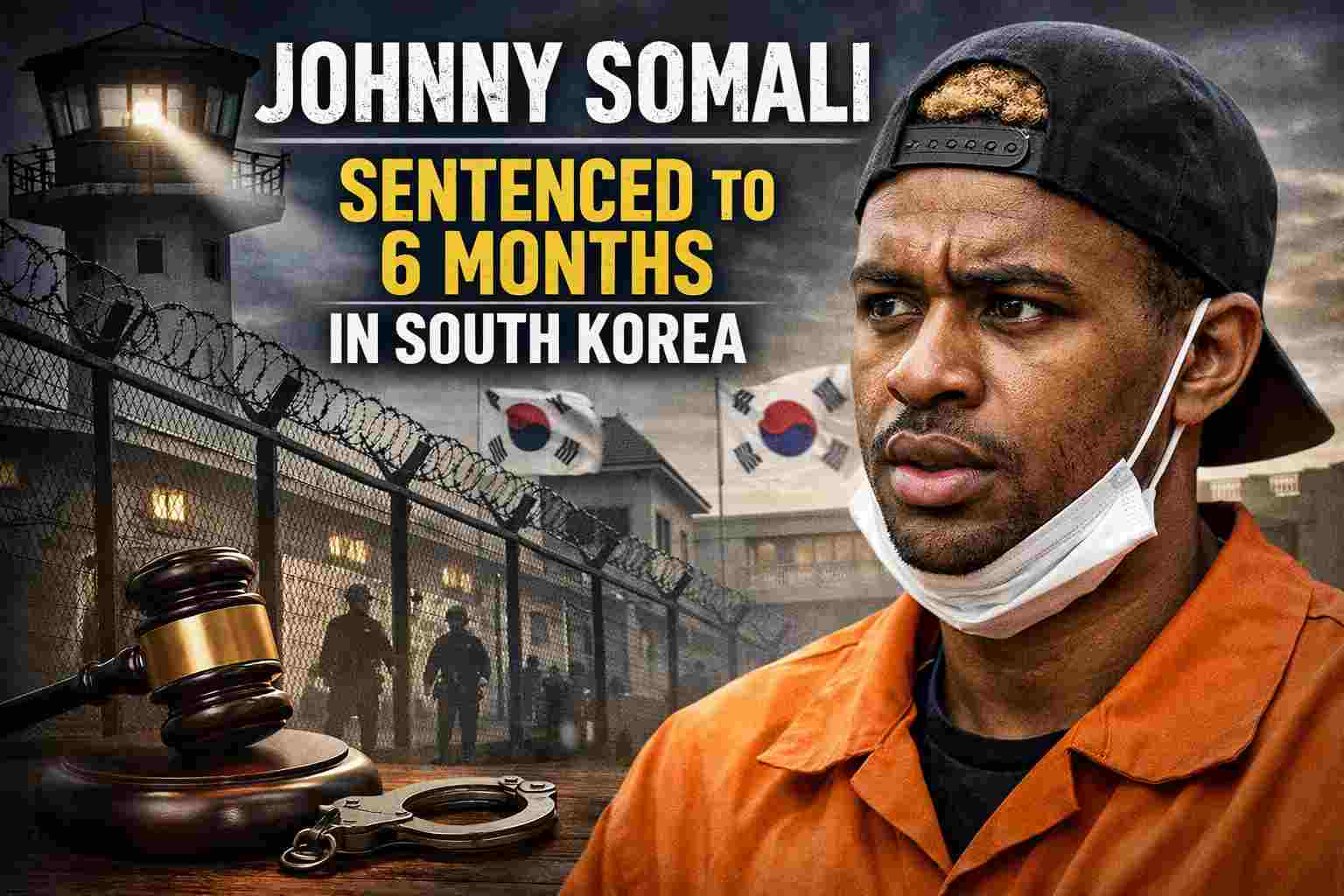
In a major legal development that has captured global attention, American YouTuber Ramsey Khalid Ismael, popularly known as Johnny Somali, has been sentenced to six months in prison in South Korea. The controversial internet personality, known for provocative and disruptive live-streaming content, faced multiple charges linked to public misconduct and offensive behavior.
This case highlights the growing clash between online content creation and local laws, especially when digital creators cross international boundaries.
Who is Johnny Somali?
Johnny Somali, whose real name is Ramsey Khalid Ismael, is a U.S.-based live streamer known for creating controversial “IRL” (In Real Life) content. His videos often involve provoking strangers, causing disturbances, and pushing social boundaries in different countries.
Over time, his actions have led to multiple arrests and bans across countries like Japan, Israel, and South Korea.
Why Was He Arrested in South Korea?
The case against Johnny Somali dates back to 2024, when he began live-streaming in South Korea. His content quickly sparked outrage due to several incidents, including:
1. Disrespecting a Historic Memorial
One of the most controversial acts involved a video where he:
- Kissed a “Statue of Peace”
- Performed inappropriate gestures around it
This statue represents victims of wartime sexual slavery during World War II, making his actions deeply offensive to the Korean public.
2. Public Nuisance and Disorderly Conduct
Authorities charged him with multiple offenses such as:
- Disrupting businesses (e.g., causing chaos in stores)
- Creating disturbances on public transport
- Using loud music and offensive language in public
These acts were categorized as “nuisance streaming”, where content is created by intentionally disturbing others.
3. Offensive and Racist Behavior
Reports indicate that his videos also included:
- Racist remarks
- Provocative arguments with locals
- Disrespect toward Korean culture and laws
Such repeated behavior intensified public anger and legal consequences.
4. Additional Serious Allegations
The case became more complicated when prosecutors added:
- Allegations of AI-generated explicit deepfake content
- Other misconduct charges during the investigation
These additional charges delayed the trial and increased its seriousness.
Court Verdict and Sentence
On April 15, 2026, a Seoul court delivered its final judgment:
- 6 months imprisonment (labor prison)
- 20 days additional detention
- 5-year restriction from working with minors or vulnerable groups
The court stated that:
- His actions were intentional and profit-driven
- He repeatedly violated laws to gain online attention
- He showed disregard for local culture and public order
Why the Court Took This Case Seriously
South Korean authorities emphasized that Johnny Somali’s actions were not isolated incidents. Instead, they formed a pattern of repeated misconduct designed to generate views and revenue.
Key reasons behind the strict punishment:
- Repeated offenses over time
- Public outrage and cultural sensitivity
- Monetization of disruptive behavior
- Ignoring warnings and legal consequences
Public Reaction in South Korea
The case triggered massive backlash among South Korean citizens:
- Many viewed his actions as disrespectful and offensive
- Online communities demanded strict punishment
- Some incidents even led to confrontations with locals
His behavior became a symbol of irresponsible foreign content creation, raising debates about digital ethics.
Legal and Global Implications
This case sends a strong message to global content creators:
1. Local Laws Matter
No matter where creators are from, they must follow the laws of the country they are visiting.
2. Content Has Consequences
Creating viral or controversial content for views can lead to serious legal trouble, especially when it harms public sentiment.
3. Rise of “Nuisance Streaming” Crackdowns
Governments are increasingly taking action against:
- Public disturbance content
- Offensive social media stunts
- Misuse of digital platforms
Johnny Somali’s Defense
During the controversy, Johnny Somali claimed:
- His actions were part of free speech
- He did not fully understand the cultural significance of the memorial
However, the court rejected these arguments, citing repeated and deliberate actions.