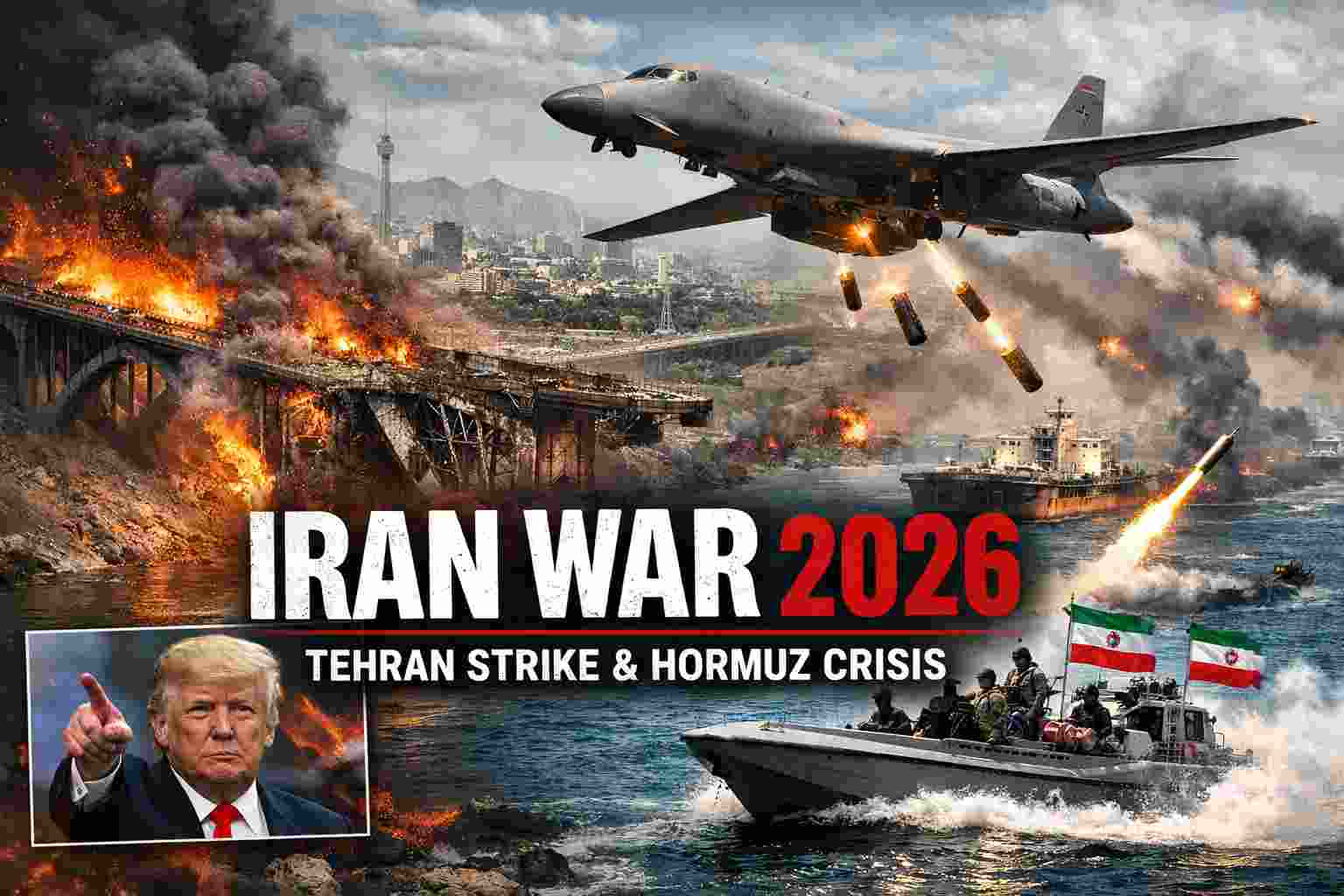
The ongoing Iran war 2026 has entered a critical and dangerous phase, with escalating military strikes, geopolitical tensions, and global economic consequences. A recent high-impact U.S.-led strike targeting Iran’s key infrastructure near Tehran has intensified the conflict, while the strategic Strait of Hormuz remains at the center of global concern.
This detailed report breaks down the latest developments, causes, and potential global implications of the war.
Background: How the Iran War Started
The conflict began on February 28, 2026, when the United States and Israel launched a large-scale coordinated military operation targeting Iran’s military bases, missile systems, and leadership.
The initial wave of attacks reportedly included hundreds of airstrikes within hours and resulted in the death of top Iranian leadership figures, including the country’s Supreme Leader. This marked a major escalation and triggered immediate retaliation from Iran across the Middle East.
Iran responded with missile and drone strikes on U.S. bases, Israeli cities, and key oil infrastructure, expanding the conflict regionally.
Trump Orders Strike on Iran’s B-1 Bridge Near Tehran
One of the most significant recent developments is the destruction of Iran’s major B-1 bridge near Tehran.
- The strike was part of an intensified U.S. offensive targeting infrastructure.
- The bridge, located near Karaj, was a major transport link.
- Reports confirm civilian casualties, injuries, and widespread damage.
Former U.S. President Donald Trump publicly acknowledged the strike and warned that more attacks could follow if Iran does not agree to U.S. demands.
This move signals a shift toward targeting critical infrastructure, not just military installations—raising serious humanitarian and legal concerns.
Escalation in the Strait of Hormuz
The Strait of Hormuz, one of the world’s most critical oil routes, has become a focal point of the conflict.
- Iran has effectively blocked or threatened shipping routes through the strait.
- Around 20% of global oil supply passes through this corridor.
- Global oil prices have surged, impacting economies worldwide.
Trump has stated that the U.S. could take control of the strait if necessary, further escalating tensions and raising fears of a prolonged global energy crisis.
Iran’s Retaliation and Military Response
Iran has continued to respond aggressively:
- Downed multiple U.S. aircraft near the Strait of Hormuz.
- Launched regional attacks targeting energy facilities and allied nations.
- Expanded strikes toward Israel and Gulf countries.
These actions highlight Iran’s ability to wage asymmetric warfare, disrupting global trade routes and increasing instability across the Middle East.
Humanitarian Concerns and War Crime Allegations
The war has raised serious international concerns:
- Strikes on civilian infrastructure, including power plants and public facilities, are under scrutiny.
- Legal experts warn these actions may violate international humanitarian law.
- Thousands of casualties and injuries have already been reported.
Global organizations have urged restraint, warning that continued escalation could lead to a large-scale humanitarian disaster.
Political Strategy: Regime Change vs Reality
The U.S. and its allies initially aimed to weaken or replace Iran’s leadership. However:
- Analysts suggest the strategy may be backfiring.
- Iran’s leadership has become more unified and resistant.
- Public sentiment inside Iran may be strengthening against foreign intervention.
Instead of collapse, Iran appears increasingly emboldened, complicating diplomatic solutions.
Ongoing Peace Talks Amid Conflict
Despite intense fighting, diplomatic efforts continue:
- The U.S. has proposed a multi-point peace plan.
- Iran has countered with demands including reparations and control over key waterways.
However, both sides remain far apart, and experts warn that negotiations may take months—or fail entirely.
Global Impact: Economy, Oil, and Security
The consequences of the war extend far beyond the Middle East:
1. Rising Oil Prices
Disruptions in the Strait of Hormuz have driven oil prices upward, affecting global markets.
2. Regional Instability
Countries across the Gulf are facing increased security risks and economic uncertainty.
3. Risk of Wider War
With multiple nations involved indirectly, the conflict could escalate into a broader international war.
What Happens Next?
The future of the Iran war remains uncertain:
- Continued escalation could lead to more infrastructure destruction.
- Diplomatic breakthroughs remain fragile.
- Control of the Strait of Hormuz will likely determine the conflict’s global impact.
Experts warn that without a clear resolution strategy, the war could evolve into a long-term geopolitical crisis.